Bits and Pieces

March 13th, 2014 § 0 comments § permalink

Roussel

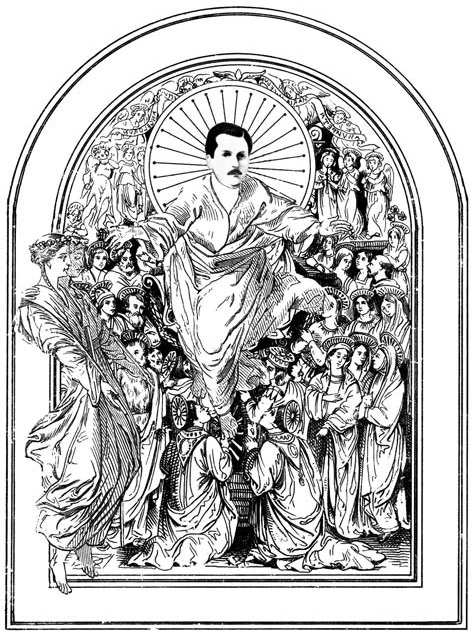
  • At Necessary Fiction, in their Translation Notes series, a piece I wrote tracing the many challenges posed by a single very short story from Jean Ferry’s The Conductor and Other Tales, on his hero Raymond Roussel’s ascension to heaven (see above).
  • At Comic Book Resources, in an article by T.J. Dietsch, a recent interview I translated with Hub, on the occasion of his comic Okko: The Cycle of Fire being released in the U.S. by Archaia.
  • A translation for The New York Times from January: former Le Monde correspondent Sylvain Cypel’s thoughts on comedian Dieudonné and the larger spectre of European racism in “Deciphering the Quenelle.”
  • Josh Coblentz reviews Jean Ferry’s The Conductor and Other Tales for HTML Giant:

[T]he ultimate sensation one gets after reading this work, Ferry’s only collection of fiction, is that he’s not so easily lumped in with the surrealist or pataphysic movements that attempted to swallow him into their pigeonholes. Instead, as translator Edward Gauvin states in his introduction, “Ferry is the exception to every movement he’s been in,” a claim that ironically puts him further in line with the ideals of pataphysics …

This small yet potent collection has too much to discuss in one brief review… For fans of quirky, bleak, and short French fiction from the post-surrealist era, this book is a new must have.

Three Shadows at Reading Pictures

March 10th, 2014 § 0 comments § permalink

Pedrosa's US Debut

Sometimes there’s a review that’s all the more in-depth for coming from outside the traditional media outlets. The educational outreach site Reading With Pictures was

founded in 2009 by award-winning graphic novelist and nationally syndicated cartoonist Josh Elder in order to revolutionize the role of comics in education…

At Reading With Pictures, we believe that comics have the potential to be more engaging, more efficient and more effective educational tools than traditional classroom materials.

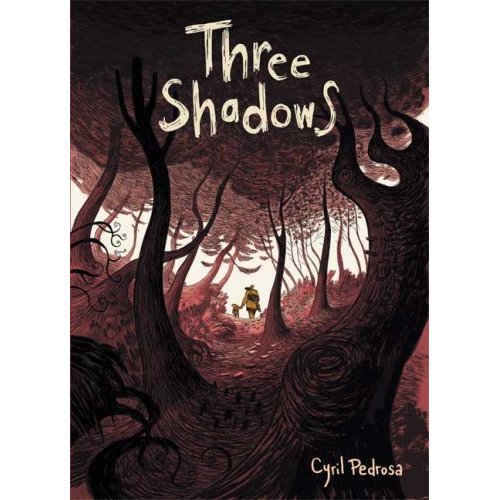
A different, and in this case, lovingly detailed look at a book you’ve worked on is wonderful. Adrian Neibauer analyzes Cyril Pedrosa’s award-winning 2008 graphic novel Three Shadows, from FirstSecond:

I would highly recommend this book for any high-school literature classroom.  Certain sections can also be used in the middle grades (6-8) for discussing the graphic novel’s major theme of fate.  However, due to some mild language and non-sexualized nudity, THREE SHADOWS is best kept in high-school literature courses.

Neibauer divides his review into discussions of “Story” and “Art,” but does not neglect to mention in his first line that the comic is translated. Now how can we get translation as an aspect of comics into schools?

Here are some highlights:

STORY REVIEW

THREE SHADOWS by Cyril Pedrosa and translated from French by Edward Gauvin is the saddest and most moving graphic novels I have ever read. Louis and Lise are a husband and wife who are raising their young son, Joachim, in an unnamed rural, European landscape. Their small family is filled with simple pleasures and lots of love as they work together on their farm. However, everything changes when three mysterious shadows appear on the horizon haunting the family. Never explicitly stated at first, we learn later that the shadows beckon for the young Joachim. Joachim’s father, Louis, flees with Joachim in a brave, yet foolish attempt to outrun his son’s fate: death.

Throughout the story, we learn just how far a parent would go to protect their child. Embedded within this story are deep and complex discussions about fate, life, and death; as well as plenty of opportunities for older readers to practice the skills of making inferences and predictions.


ART REVIEW

THREE SHADOWS is completely pencil-drawn. Pedrosa’s use of black and white charcoal prepares the reader for the dark tone of the story. Pedrosa is a former Disney artist/animator and this experience serves him well here. He writes little dialogue, yet conveys much action, movement, and emotion. he characters seem to animate themselves as you turn each page.

Pedrosa’s artwork forces the reader to stop and think. His attention to detail gives readers all the clues they need to make accurate predictions and to infer about the plot. Each page can be used as a talking point or a stand-alone example of the novel’s themes and symbols.
Geeks of Doom Praise Pachyderme

March 8th, 2014 § 0 comments § permalink

pachyderme-cover

RevN4 says:

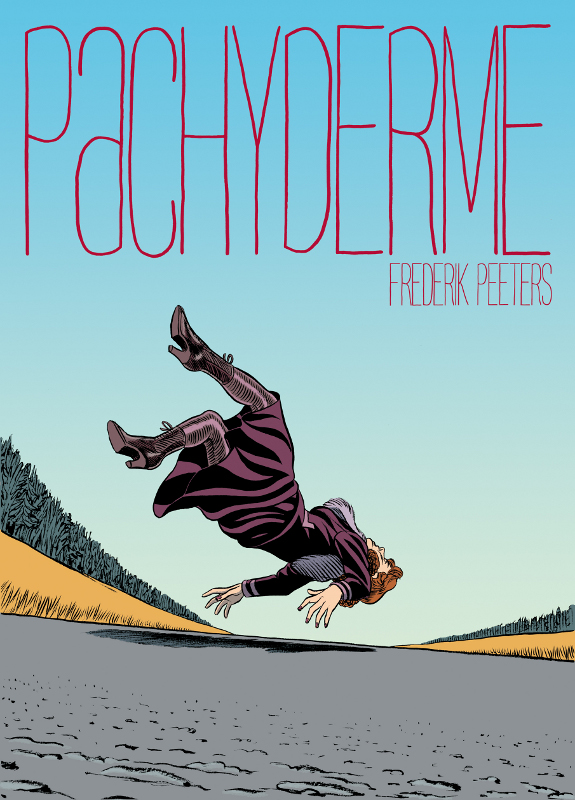
This is book that begs multiple read-throughs. This is a piece of literature that needs to be discussed among friends. Peeters’ script and artwork communicates a dream-like state that simultaneously doesn’t and does make perfect sense. He has captured a dream in the form of a comic…

Readers who enjoy both literature and comics in the spirit of City of Glass and Ghost World will find much to enjoy in Pachyderme.


The Comixverse Loves Sharaz-De

March 6th, 2014 § 0 comments § permalink

Toppi 3

At The Comixverse, Zedric Dimalanta calls the Sergio Toppi’s work “absolutely astounding” in Sharaz-De: Tales from the Arabian Nights, published in 2012 by Archaia:

A rare English translation of a seminal work by one of Europe’s most influential artists.

Features absolutely gorgeous line art and radical storytelling techniques that any serious student of comics and sequential art with the means should view and study.

Classic tales are allowed to retain their simple charm.

Informative, entertaining foreword by Walt Simonson is almost a brief art lesson on its own.

Love for We Won’t See Auschwitz

March 4th, 2014 § 0 comments § permalink


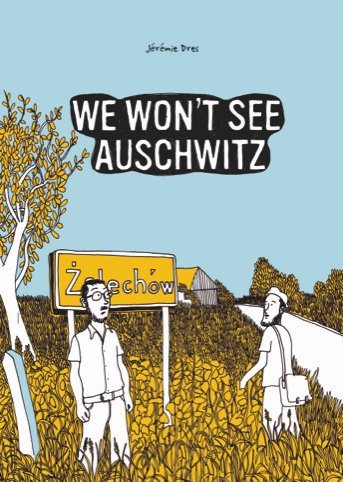
We Won't See Auschwitz

Jérémie Dres, a French comics creator of Jewish Polish descent, recently gave an event about his graphic novel We Won’t See Auschwitz, published last year by SelfMadeHero. Late Night Library features an interview with the creator (scroll down):


Stephanie Trott at Cleaver Magazine (where Brazos Price also reviewed Frederik Peeters’ Pachyderme from the same publisher) says:


The reader is dropped immediately into the action, rendezvousing with Dres in Warsaw’s historic Old Town as he searches for his grandmother’s original home on an unseasonably warm June afternoon. Together we search with him through the clouded eyes of the past for the buildings and neighborhoods his grandmother once recalled perfectly from memory, only to find that they either no longer exist or have been altered beyond recognition. Dres, eager to learn from those currently dwelling within the city walls, next meets two “young, Jewish, Polish, and hip” Varsovians who advise and answer his questions about the current sentiments of Poland toward Jews. He is amazed to find that there are still Jews in Poland, his own family having long since departed for France. Dres continues to meet both older and younger Polish residents, conducting a series of informational interviews and receiving in return detailed contemporary history lessons. The week becomes one where movement is somewhat determined by conversation, the destinations lingering on the horizon like doors begging to be opened. We tumble into this rabbit-hole expedition like Alice through the looking glass, as the present becomes a vehicle for gaining access to the past.


At Library Journal, Ingrid Bohnenkamp of Missouri’s Springfield-Greene County Library District says:


By not seeing Auschwitz, Dres discovers family secrets and an understanding of where he came from, but, more important, he discovers the vibrant Jewish identity that existed before and during the Nazi occupation and that continues in modern-day Poland.


Verdict: For readers who think a serious story can’t be told with pictures, Dres offers a wonderful introduction to the graphic novel. Recommended for graphic novels fans who want to read more nonfiction.


And finally Publishers Weekly weighs in:


The book, an English translation of Dres’s Italian graphic novel of the same name, details the author’s journey to Poland with his brother, Martin, to trace their Jewish roots after the death of their grandmother. Told in a clean journalistic style that prizes accuracy over adventure… The book gets off to a promising start, describing the humorous and touching relationship between Dres and his grandmother. It then delves meticulously into the brothers’ journey to Poland and the surprises they find there regarding their Jewish heritage. As the title suggests, the brothers choose not to visit Auschwitz and instead focus on the current state of Jews and Judaism in modern-day Poland. It’s a smart decision to avoid this already-well-trodden territory… Simple, pared-down b&w visuals are a good match for the subject matter, and the more active and emotionally resonant scenes, like the one describing the discovery of the grave sites of the brothers’ ancestors.

Kind Words for Blutch’s So Long, Silver Screen

February 26th, 2014 § 0 comments § permalink

Cover design by David Mazzuchelli

Cover design by David Mazzuchelli

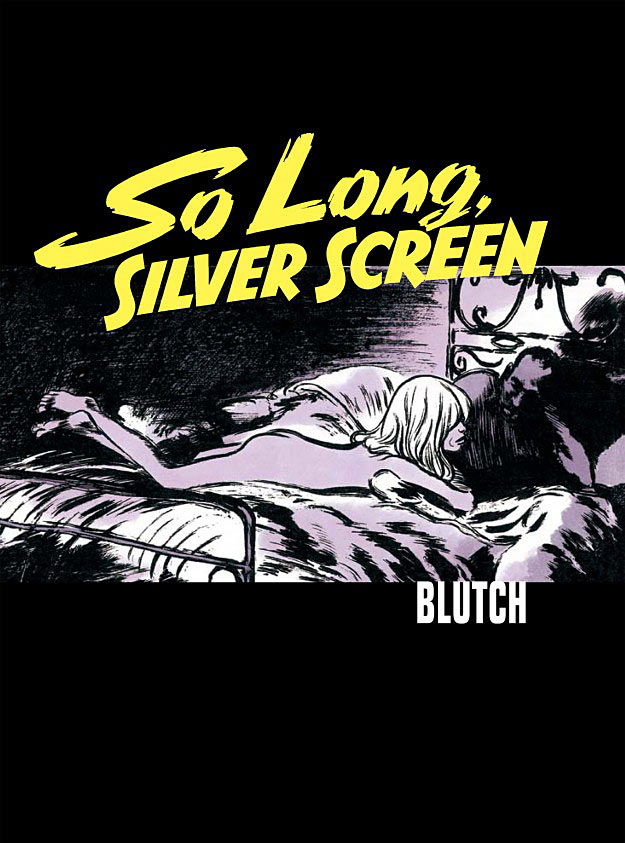
At UK site Comics Review, Win Wiacek has this to say about Blutch’s So Long, Silver Screen, out last year from Brooklyn-based PictureBox:

This lyrical, declamatory, harshly imaginative and lyrically introspective collection of short tales – as much stern self-analysis as autobiographical exploration – by pre-eminent cartoonist and illustrator Blutch examines the creator’s relationship to and lifelong shaping by the magic of celluloid fantasies and the mythical icons who made and populated them.

Challenging, enticing and genuinely thought-provoking, this delicious cartoon voyage with a keenly enquiring companion – who has all of the questions but so few answers – is a sheer joy that no grown-up fan of graphic narratives and motion pictures can afford to miss.

Sadly, PictureBox shut its doors at the end of last year. It was a fine publisher of beautiful books, and will be missed.

This Friday at AWP

February 25th, 2014 § 0 comments § permalink

I will be on the following panels this Friday morning, 2/28, at the Associated Writing Programs 2014 Conference in Seattle, WA:

See you there!

What Ho, Châteaureynaud!

February 24th, 2014 § 0 comments § permalink

Cover art by Marcela Bolivar

Cover art by Marcela Bolivar

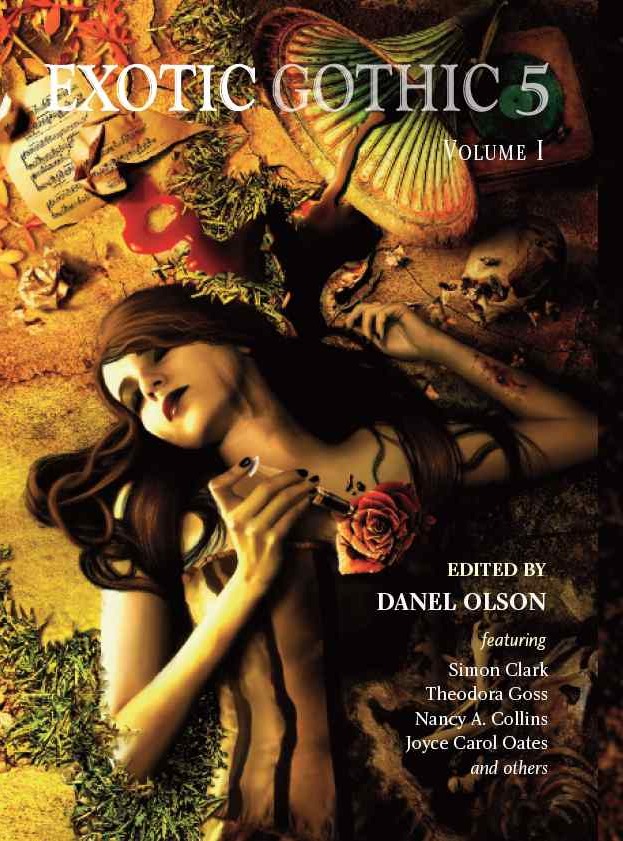
Exotic Gothic 5, edited by Danel Olson, which came out last year from PS Publishing, recently made Locus Magazine’s Recommended Reading List. It contains Georges-Olivier Châteaureynaud’s story “The Open Mirror,” which Mario Guslandi at SF Site called

“a delightful supernatural tale with a spicy touch of eroticism first published in French and here translated into English by Edward Gauvin.”

UK Cover

UK Cover

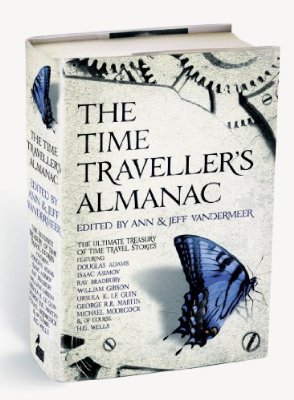
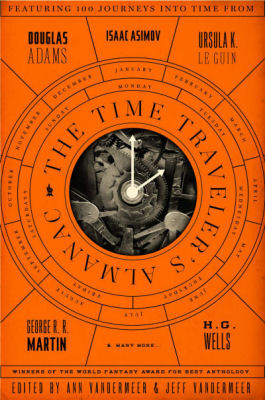
Châteaureynaud’s “The Gulf of the Years,” which originally appeared in the 2010 Small Beer collection A Life on Paper, was reprinted in Ann & Jeff VanderMeer’s colossal anthology, The Time Traveler’s Almanac.

TheTimeTravelersAlmanac

Why Words Without Borders Is Still The Best of Its Kind

February 22nd, 2014 § 0 comments § permalink


This post is unpremeditated. Had I planned it, I’d probably have been able to supply better reasons, or more thoroughgoing argumentation, or even anticipate objections to my reasons, and shut those down.

I was going to post about my latest blog piece there, “Tintin in the Land of Foreign Affairs,” about the experience of working on Weapons of Mass Diplomacy by Abel Lanzac and Christophe Blain, a graphic novel forthcoming from UK indie stalwart SelfMadeHero this May. But instead, I found myself feeling very grateful for my long, fruitful working relationship with Words Without Borders, and listing my purely personal, sometimes honorable, occasionally venal reasons for loving it.

WWB

It was the first.

It is truly global in scope.

It does comics every year.

It does an LGBT issue every year.

It sees to the permissions process for translators.

It pays for those rights.

It pays translators.

Just sayin’, is all.

13 years of bringing you world literature, going on 14! Consider giving today.

H.V. Chao in The Red Line’s Best of 2013

February 20th, 2014 § 0 comments § permalink

Shipbreaking

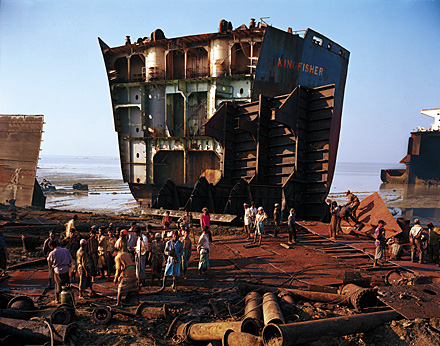
H.V. Chao’s “The Scene” is among the twelve selections in The Red Line’s Best of 2013 anthology. In the preface editor Stephen Lynch says:

One of the things that always draws us to a story is a strong voice and tangible sense of place. Both of these were evident in two selections from the Excess issue: Rush by Bear Weiter and H. V. Chao’s The Scene. We loved the rich atmosphere in both stories and how a sense of desperation and hyper-activity threatens to overwhelm the central characters.