Code 46, Part 2 of 2

September 24th, 2011 § 0 comments § permalink

Thoughts on Code 46, continued…
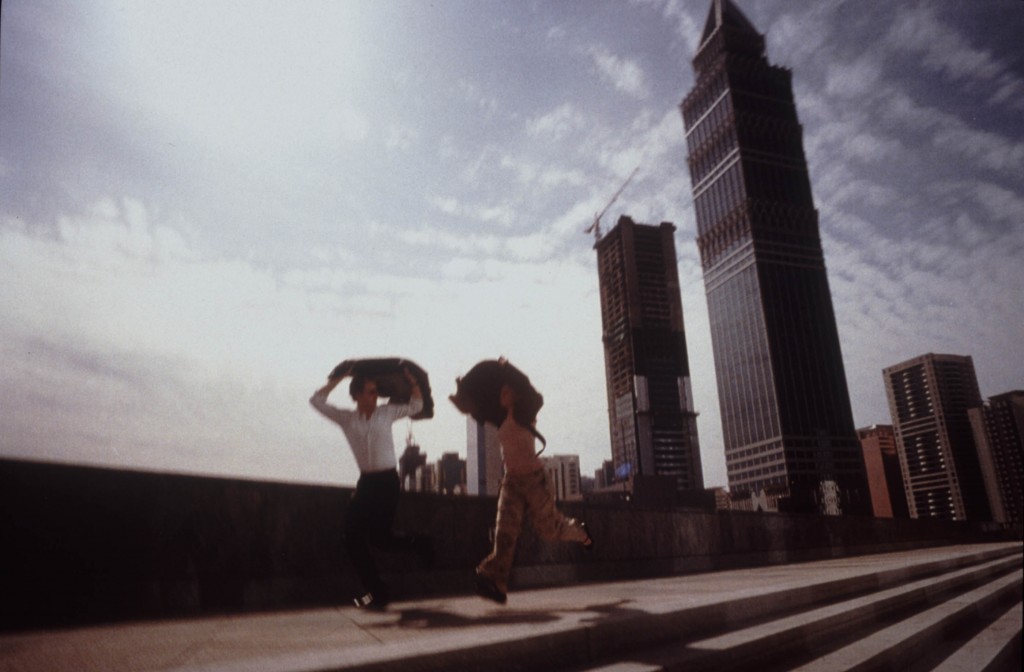
The “standardized future” as a concept—something which, if not yet entirely real, SF has long been reaching for—is technological in the broadest sense (see Billington via Segal: not only “machines” but “structures, those fixed buildings which form the physical foundations of society” Technological Utopianism, 12). Thus it is not a gadget Code 46 proffers but the complete vision of a world, a production design as cohesive in its way as that of Menzies’ Things to Come, not manufactured but cobbled together from existing architectures and locations. The presentation of a piecemeal future, rather than one of whole cloth, is a measure of cultural difference between the two eras in which these films were made. “‘Found’ spaces” (Code 46 Production Notes, 6) in Dubai, Shanghai, Kuala Lumpur, Hong Kong, London, and Jaipur are fused together in a

“‘creative geography’, often matching the exterior or exit of a building in one well-known city with the entrance or interior of a building in a different city. “We thought that the most interesting thing to do,” says production designer Mark Tildesley, “would be to try to fool the audience by taking the most interesting bits from each location. So you’d have the impression that you were walking out of a door in one city, but you’d actually end up walking out of it into completely different place, somewhere else entirely.”

The net effect of this assembly is to emphasize the homogeneity and interchangeability of an aesthetic we have come to qualify as futuristic. Social critics have long bemoaned the visual monotony common to sites of commerce (malls, office parks, skyscrapers) and public transit (airports, subway cars and stations). Jacques Tati mocked the universal anonymity of modernity with a series of nearly identical travel posters in Playtime, and Ken Kalfus humanized consumer desire in an age of mass production with the playful Calvino tribute “Invisible Malls” (Thirst, 147-153). Indeed, it is almost as if one mall were all malls, one lobby led to all lobbies, and we might pass unremarked from one to another. Splicing these urban environments together construes a contiguous transcontinental urban space whose unifying trait, besides impersonality, is privilege. Producer Andrew Eaton notes the “contradictory architecture” and curious juxtapositions to be found in modern cities like Shanghai and Dubai (C46PN, 6), which came to be reflected in the film’s politics: wasteland and metropolis, poverty and modernity, Reservation and Brave New World. Although distinct, geographically disparate cities are named in the film—a Shanghai that looks like Dubai, a Seattle that looks like Hong Kong—the network of cities known as “inside” functions as a unified first world, a global high future, as if to prove that urbanity according to the theories of Rem Koolhaas were not only feasible, but in a way already here, lacking only the system the movie posits to connect them and hermetically exclude undesirable social elements. » Read the rest of this entry «
Code 46: Futures, High and Low

September 20th, 2011 § 0 comments § permalink

So, this fall I’ve been lucky enough to have Henry Jenkins let me into one of his graduate seminars. I’ve been an avid follower of his blog since visiting MIT in late 2007, so imagine my joy, on getting in to USC last year, at finding he’d moved there.

This particular class, Science Fiction as Media Theory, has a dream reading list. The stated aims are “looking primarily at science fiction texts (mostly literary) as ways of thinking through the implications of media change” and “looking at media theories for the implicit utopian or dystopian claims they make and for the ways they have drawn on metaphors from science fiction.”

Responses to weekly reading are posted on a class discussion board accessible only to those enrolled. I’d considered cross-posting my thoughts here, and still might, but in the meantime, I’ll be going ahead and posting parts of my first paper, which examines an overlooked 2003 movie I’ve always liked, Code 46.

Directed by Michael Winterbottom and written by Frank Cottrell Boyce, Code 46 (2003) is a SF-inflected retelling of Oedipus with a double-helical twist (so to speak). However, the film’s more lasting impact may lie in the near future it posits than in its plot. In look and language, Winterbottom and Boyce create a future collaged from disparate parts of the present, which serves to update the hoary SF concept of “the standardized future” and, more subtly, to critique contemporary social and technological trends.

Utopian or dystopian, science fiction—twinned at birth with a technological dream of universal automation—has often posited a future of uniformity. In whatever future is pictured, everything will be of a piece. This is because we will have superseded inefficiency (perhaps at the cost of humanity), because we will have harmonized the paraphernalia and developmental paces of various technologies, and because images of the future brought to us by science fiction are the ultimate form of advertising. As John Berger notes, “The publicity image, which is ephemeral, uses only the future tense.” (Ways of Seeing, 144). That table will go with these chairs in the glass room overlooking the city, and we, whether executive or drone, will be in matching attire. This was for a long time the case in SF.

These days, the future is less monolithic. No more does it beckon, our millennial fate, like Kubrick’s enigmatic menhir, but comes into being by dribs and drabs. » Read the rest of this entry «
Together at Last

September 13th, 2011 § 1 comment § permalink

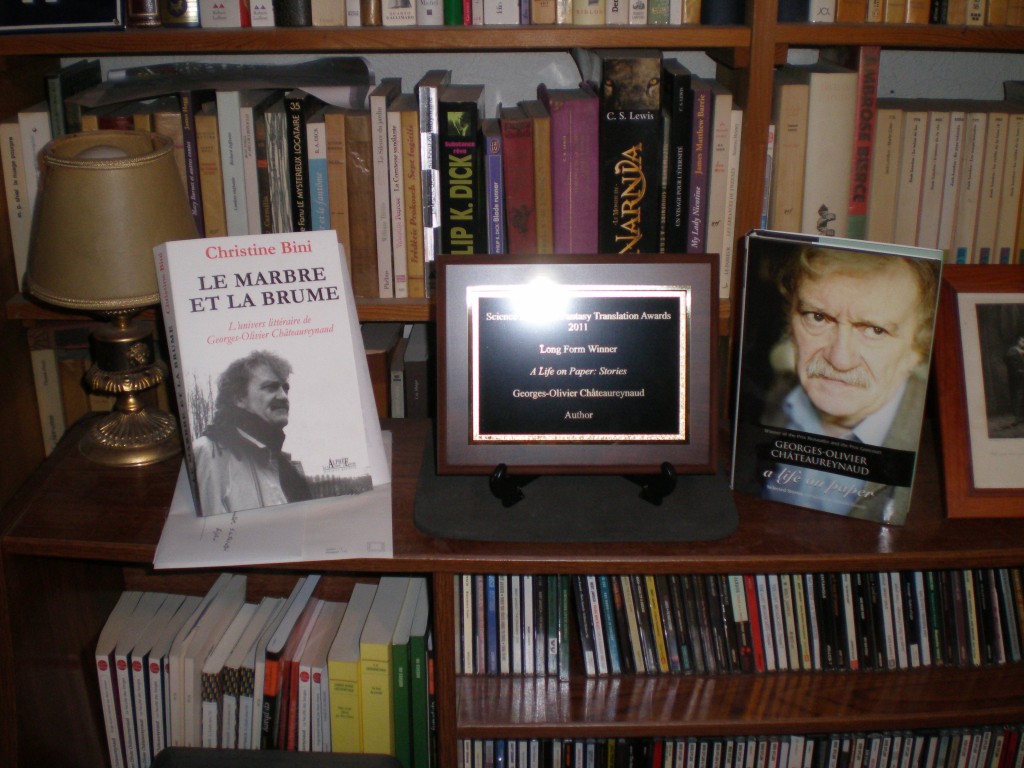
Author…

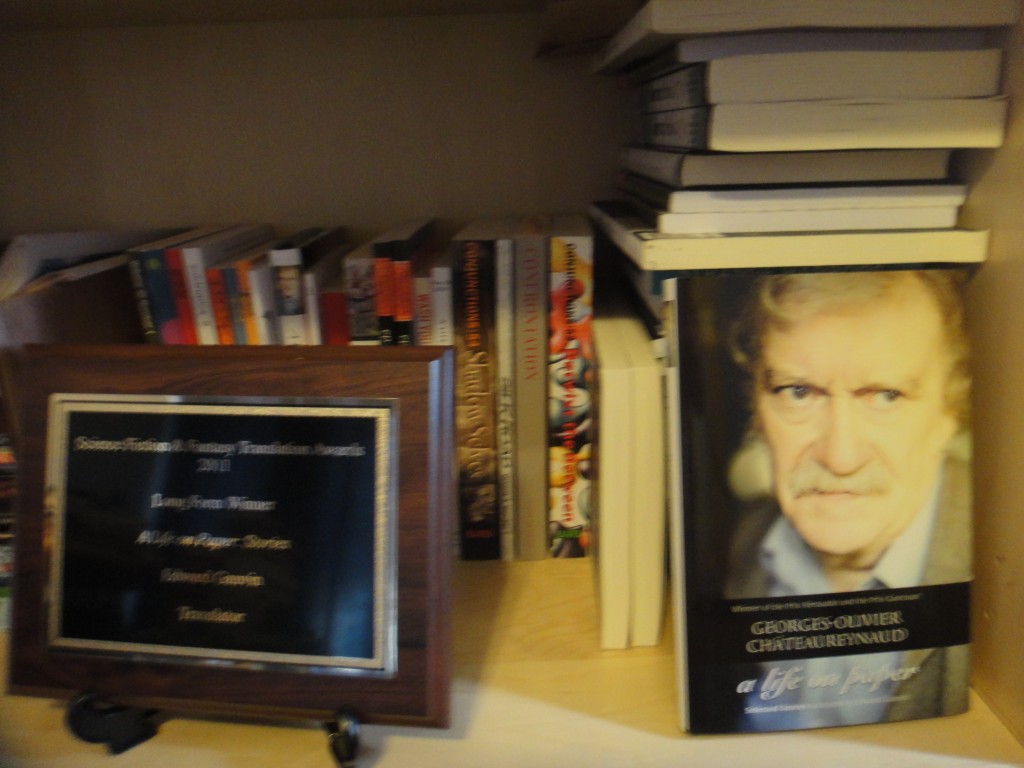
and translator:

Thank you, Association for the Recognition of Excellence in Science Fiction & Fantasy Translation!

Around the Interwebs

September 8th, 2011 § 0 comments § permalink

  • My essay on the Belgian political impasse from a literary viewpoint, “The Year of Living Mildly,” is now live at the Fall 2011 issue of The Quarterly Conversation. Here’s a quote: “I can’t say that after a year I know to define Belgitude, but like Justice Potter Stewart and pornography, I know it when I see it.”
  • The essay accompanies my translation, also at QC, of Yves Wellens’ story “In Tempore Semper Suspecto,” a bit of canny speculation first published in 2007 that only seemed all the more prescient when the government stalemate in Belgium began in April 2010. Here’s a quote: “An emergency session of Parliament was called on the evidence of unverifiable rumors and unfounded assertions.”
  • Thierry Horguelin takes time on his blog Locus Solus to plug the latest issue of Birkensnake, featuring selections from his chapbook The Night Voyager, and offer an exceedingly kind and uncalled-for thanks to his translator (me). Here’s a quote: “J’ai toujours pensé que le plus beau cadeau, pour un écrivain, consistait à être traduit dans une langue qu’il connaît, de manière à pouvoir enfin se lire comme un autre.” Horguelin’s Quebec-based publisher L’Oie de Cravan also gives the issue a nice nod on their blog (scroll down to the paragraph under “En tête”).
  • Nicole Taylor’s eerie and delicate short-short of Pandora and postapocalypse, “Last Boots on the Ground,” is live along with the Summer 2011 issue of The Puritan. Here’s a quote: “Yesterday, I opened The Little Prince and it fell to pieces in my hands.”

R.I.P. André-Marcel Adamek

August 31st, 2011 § 0 comments § permalink

as of this morning in Belgium. One of Belgium’s finest contemporary storytellers, he wrote more than fifteen books of fiction, poetry, and teleplays. An autodidact in everything he set his hand to, he was, over the course of his varied career, a cruise ship steward, a toymaker, a paper wholesaler, a goat farmer, an editor, and a ghost writer. He invented and patented a stackable bottle carrier a speaking crib. His many awards include the Prix Jean Macé, the Prix triennal du roman, the Prix du Parlement de la Communauté française, and the Prix Rossel, Francophone Belgium’s top literary prize.

Although he scarcely considered himself a fantasist–more a pessimistic humanist–he made liberal use of folktale, magic, and the fantastic in his penetrating studies of human nature, and the ways our lives  mimic mythical patterns, striving clumsily but indefatigably for some eternal quality. His rich language lent realism to the brocade of legend. When I visited him at his farm in Fisenne in early June, lung cancer had already away taken one lung. His prostate cancer was inoperable, and he had recently fractured his shoulder blade. His sturdy house overlooked cows at pasture in the green Ardennes. He smoked a pack and a half of Pall Malls during dinner–“one of the few pleasures left to me“–and the glimmer in the future then animating him was the prospect of being a guest conductor for a December concert of the orchestra in Namur: the realization of a lifelong dream. The efforts he made to show me every courtesy and mask his own suffering were heartbreaking. I only met him once, and I mourn him. He is survived by two sons and his widow Ingrid.

Birkensnake $4

August 25th, 2011 § 0 comments § permalink

is out and now available for purchase! Featuring killer robots, occasional nudity, and science. Also my translation of selections from Belgian fabulist Thierry Horguelin‘s “The Night Voyager.” Now, you could just consult this online, as the entire issue is available there, as well as in epub, pdf, and html formats, for free. But then you would miss out on the wonderful cover by Joe Potts. Besides, as editor Brian Conn reminds us,

“The print edition of this issue comes with a small bag of gray powder which reveals secret messages; it is extremely wonderful and you will not want to miss it.  Nor will your friends and admirers want to miss it.  Tell them!  Tell them not only about the new very pink website, but also about the small bags of gray powder and how this experience can be theirs for only four dollars.”

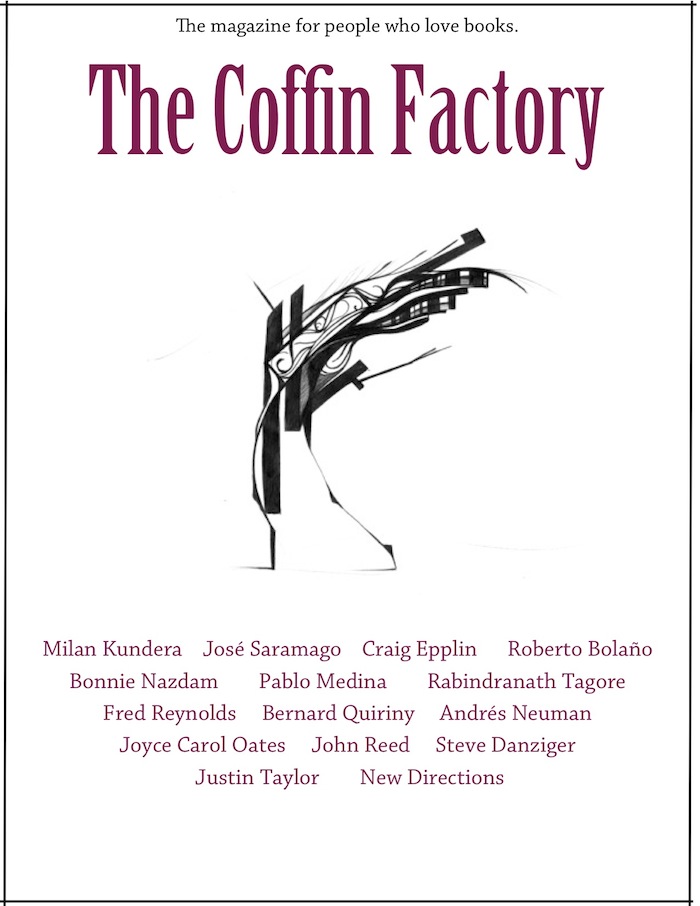
The Coffin Factory Debuts

August 11th, 2011 § 3 comments § permalink

its smashing first issue, available at a discounted rate directly from the site before it hits newsstands October 1st.  Holy A-list, Batman! Check out that literary lineup! Saramago, Bolaño, Kundera, Tagore, Joyce Carol Oates, and more… I lucked out smuggling a Bernard Quiriny story into that bunch! Go check it out!

Maurice Pons: A Literary Pilgrimage now at Tin House

August 9th, 2011 § 0 comments § permalink

“Is this how you pictured the world of Maurice Pons?”asked a Paris-based Colombian filmmaker. We were walking through an evening light that seemed, in the long summer day, not to have changed since early afternoon. It fell in shafts, where gnats danced, past a canopy of leaves onto the gravel path that led uphill toward dinner. A turtled rowboat, an abandoned tennis court… As we rose, the far bank unfurled its golden fields of shorn wheat; the placid Seine, a hundred kilometers downstream from Paris on its way to the sea, only added to the idyll.

“No,” I replied. “I didn’t think it would be this beautiful.”

Inside the millhouse, glass panels have replaced fallen-through patches of plaster flooring, giving vertiginous views of the great wheel hoisted from the green waters below. A steeply peaked roof supervises eclectic decoration—oil murals, copper cookware, chairs of sizeable sag and faded upholstery; a round cushion of brown velour tossed on a massive original millstone turns it into a seventies modernist sofa fit for a sunken living room. At every hour of the day, light bathes a blond wood baby grand by the window.

Read more at the Tin House blog!

A Game for Swallows Coming to America

July 27th, 2011 § 1 comment § permalink

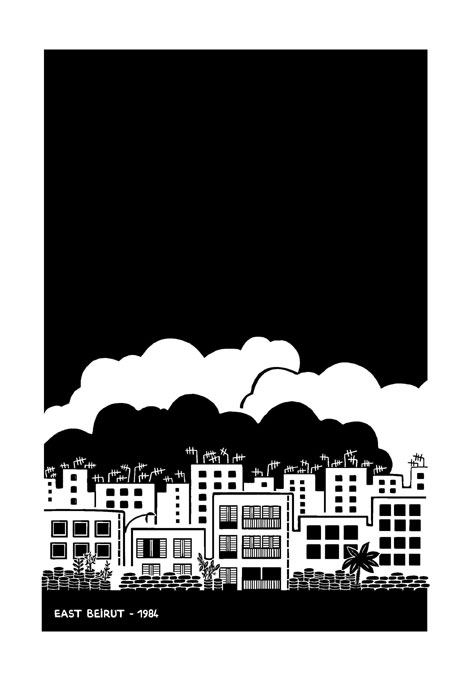
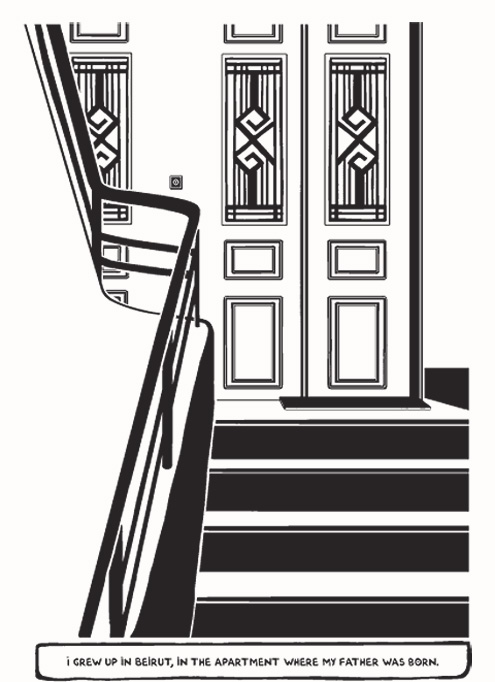
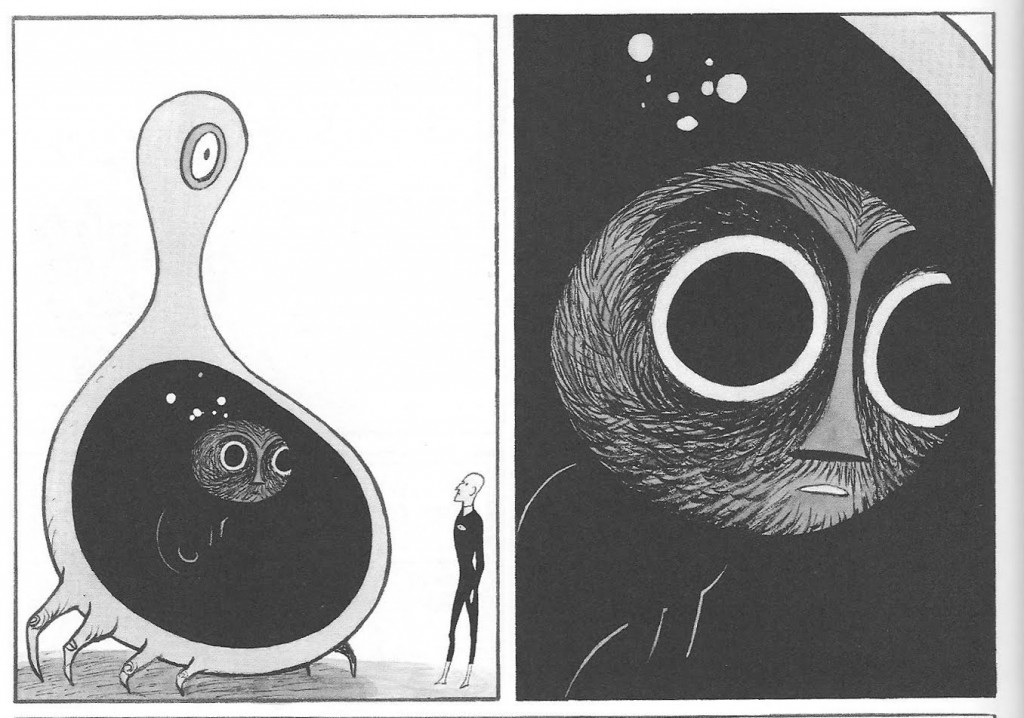
I’m proud to announce that thanks to the tireless efforts of agent Nicolas Grivel, a fabulous graphic novel will be making it into English. Excerpts from it have previously appeared online at Words Without Borders and in print in PEN America, and the publication is aided by a generous French Voices grant from the French Embassy’s Cultural Services.

What I’m Working On (Right Now)

July 22nd, 2011 § 0 comments § permalink

Another secret French project I’m very excited about, slated for November release.