August 30th, 2014 § § permalink

In the June issue of Asimov’s, my first translation in that august staple of all things SFnal: Sylvain Jouty’s “The Finges Clearing.†A member, like Georges-Olivier Châtaureynaud, of the French literary movement “La nouvelle fiction,†Jouty’s first story in English came out last January in the mountaineering magazine Alpinist: “The Wall,†a Calvino-esque tale about a vertical world (Jouty himself is a natural historian and climber, former editor of Alpinisme et Randonnée.
Here’s an excerpt:
“Of all the virgin territories, dwindling daily, that subsist on this cramped planet—a few mountain tops, a few acres of primeval forest—the Finges Clearing is the most surprising and the least known, precisely because it perfectly resembles the perfectly known territory around it. It is the most remarkable because there is absolutely nothing remarkable about it.”
Chuck Rothman at Tangent Online calls the story “a vignette about a small area in the forests around a small town with a unique history… pure idea, with a bit of ironic commentary on how tourists behave.â€Â Joe Martin at Minor Thoughts highlights the story’s “very nice natural history tone… that reminded me a lot of Jules Verne,” while Sam Tomaino at SFRevu calls it a “beautiful, lyrical piece.†Glad that came through in translation!
Buy it here or discuss it here!
August 29th, 2014 § § permalink

At the newly redesigned Irreal Café, a kind review by Greg:
“The stories themselves are quite brilliant. As this is but a short review, I will attempt to describe Ferry’s stories succinctly but imperfectly by stating that they present a reality being pushed by the circumstances described in the story and the narrator’s reflections on those circumstances to the breaking point and then, inevitably, past it.â€
At The Mooske and The Gripes, Trevor Berrett calls The Conductor “a beautiful, compact book, and slipping in and out of each tale is a delight, even if the stories explore some of the darker areas of our mind.â€
Finally, Matt Pincus at Necessary Fiction writes:
“At times transgressive, and at others with a Poe-like Gothic, the stories are also ironically mythical, creating a juxtaposition of nuance and beauty.
These 25 stories have transient, wandering elements in which characters inhabit a place somewhere between fact and fiction, history and illusion, dream and reality of an eerie murkiness…
There is a ghostly, ethereal quality to each tale, which, as the collection progresses, become darker and phlegm-like. A tale not part of the original collection is of a man on a mountain expedition who loses his partner climbing an ice sheet, but seems to be only clinging a few feet off the floor in someone’s home. Each story shifts between admiration for spectacle, and violence or mortal danger within that spectacle. As any excellent story collection, the tension vibrates at unexpected moments, and the language expands, or crests at moments of insight to allow the reader’s creativity to see a new perception of their own imagination.”
August 28th, 2014 § § permalink
Congratulations to this year’s NEA Literary Translation Fellows! I was proud to serve on the panel this year, and let me tell you, there were some tough calls to be made.
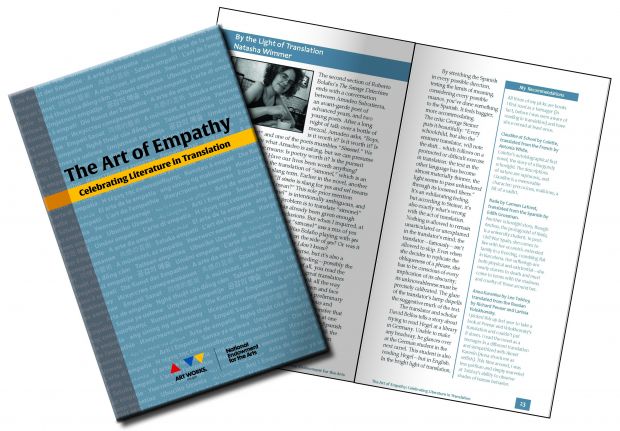
In concert with this announcement, the NEA has also released an anthology of original essays by award-winning translators and publishers, aptly entitled The Art of Empathy. These nineteen thoughtful essays consider the art of translation and its ability to help us understand other cultures and ways of thought. The book is available as a free pdf download.
In addition, on Saturday, August 30, 2014 from 10:55 a.m.–11:40 a.m. at the National Book Festival, the NEA-sponsored Poetry & Prose tent will feature a panel discussion on books in translation with author-translator Paul Auster and Natasha Wimmer (Roberto Bolaño’s translator). Moderated by Amy Stolls, the panel will discuss the art of translation and its role in the literary world. More information about the authors appearing at the Poetry & Prose tent can be found here.
August 27th, 2014 § § permalink

The good folks at The Collagist have seen fit to bring you in their July issue my translation of “The Great Pity of the Zintram Family†by Belgian fabulist Anne Richter. I’ve written about before Richter at Weird Fiction Review and for Not a Journal, the Small Beer Press blog. To celebrate this happy publication, here’s a preview from the story, a kooky dinner prayer:
O Fire! Tonight we bring you our watery dreams.
Wring them, dry them, destroy them.
Water speaks of sleep and death, but we want life.
Be our watcher and our guardian, our father and soldier.
Protect the parents from the children and the children from themselves.
Heal our little Arthur,
Guide his steps through the house, through the meadow, to the pond’s edge.
Forgive us our sins as we forgive those who have sinned against us.
Enlighten us, warm us, keep the waters from this house.
So be it.
August 25th, 2014 § § permalink
My last two pieces for the venerable Gray Lady:
“As time passed, a vanguard of talented mixed-race players began gaining acceptance to some teams; to minimize racist insults and physical abuse from opponents and spectators in 1914, Carlos Alberto of Fluminense is said to have lightened his face by daubing it with rice powder. Others, like the legendary Arthur Friedenreich in the first third of the 20th century, would smooth their hair down with Brilliantine.â€
“For decades in France, that Resistance victory — the universalist spirit of progress and the Enlightenment triumphing over the herd-like, xenophobic spirit of Vichy — put everyone who had collaborated with Nazism outside the legitimate political and moral field. And even though the Resistance was far less united than had been imagined during the war, it had been united enough to reach agreement in March 1944 on a farsighted program of national reconstruction as the principal war aim.”
June 9th, 2014 § § permalink
This month, Jeff VanderMeer has handed me the keys to Weird Fiction Review. I’ve got lots of goodies lined up for my one-month stint as guest editor, so do check it out! Up so far, in the first week: fiction by Tim Wirkus, Jean Muno, and Anne-Sylvie Salzman about tails, ghouls, and ossuaries! Nonfiction, poetry, and more translation to come!
May 13th, 2014 § § permalink
Color me chuffed: Jean Ferry’s The Conductor and Other Tales is the little book that could, racking up a second major award nomination after the recent shortlisting for the French-American Foundation Translation Prize. From the press release:
The Oxford–Weidenfeld Prize is for book-length literary translations into English from any living European language. This year’s shortlist includes eight books instead of the usual six – in recognition of the high quality of this year’s translations and the large number of entries (151). Formal experimentation and reflections on recent European history are prominent in the shortlist this year. This year’s judges are the academics and writers Jonathan Katz, Adriana Jacobs, Patrick McGuinness and Matthew Reynolds (Chair).
Last year’s winner was Philip Boehm for his work on Herta Müller’s The Hunger Angel. I am amazed to find myself up against Anthea Bell, who has long been a personal inspiration to me for her work on Sebald’s Austerlitz as well as Astérix and Obélix. Among the authors: 2 Germans, 3 French, 1 Italian, 1 Russian, 1 Polish, only 1 woman. Among the translators: what looks like an even UK-US and male-female split. 3 novels (one with verse), 3 poetry collections, 2 story collections (one quasi-autobiographical). A very good year for small presses on both sides of the pond. Full shortlist below, from the press release:
THE SHORTLIST
- Anthea Bell for Eugen Ruge’s In Times of Fading Light (Faber): An adept, subtle translation of a novel which explores political history and inter-generational conflict with great seriousness and flashes of humour.
- Isabel Fargo Cole for Franz Fühmann’s The Jew Car (Seagull Books): A fluent and compelling translation of a powerful account of the forming of political views and prejudices.
- Susan Wicks for Valérie Rouzeau’s Talking Vrouz (Arc publications): These translations of Rouzeau’s idiosyncratic French are exact, inventive and full of life.
- David Homel for Dany Laferrière’s The Enigma of the Return (MacLehose Press): A lyrical, resourceful and tonally perfect rendition of a novel which mixes verse and prose.
- Peter Daniels for Vladislav Khodasevich’s Selected Poems (Angel Classics): Subtle, skilled translations of the haunting verse of an early-C20th Russian poet.
- Alastair McEwen for Andrea Bajani’s Every Promise (Maclehose Press): A deeply convincing rendering of this recent novel of recollection, disjunction and loss.
- Edward Gauvin for Jean Ferry’s The Conductor and Other Tales (Wakefield Press): A poetic, clear and well-pitched translation of this startling surrealist work from 1950.
- Mira Rosenthal for Tomasz Różycki, Colonies (Zephyr Press): Virtuosic translations of a moving Polish sonnet sequence about place and the past.
Shortlisted translators will be invited to read from their work, and the winner will be announced, at the prizegiving and dinner at St Anne’s College Oxford on Saturday 14th June. This will be the crowning event of the first ever Oxford Translation Day (13th-14th June) which boasts a varied programme of talks, workshops and readings.
May 11th, 2014 § § permalink
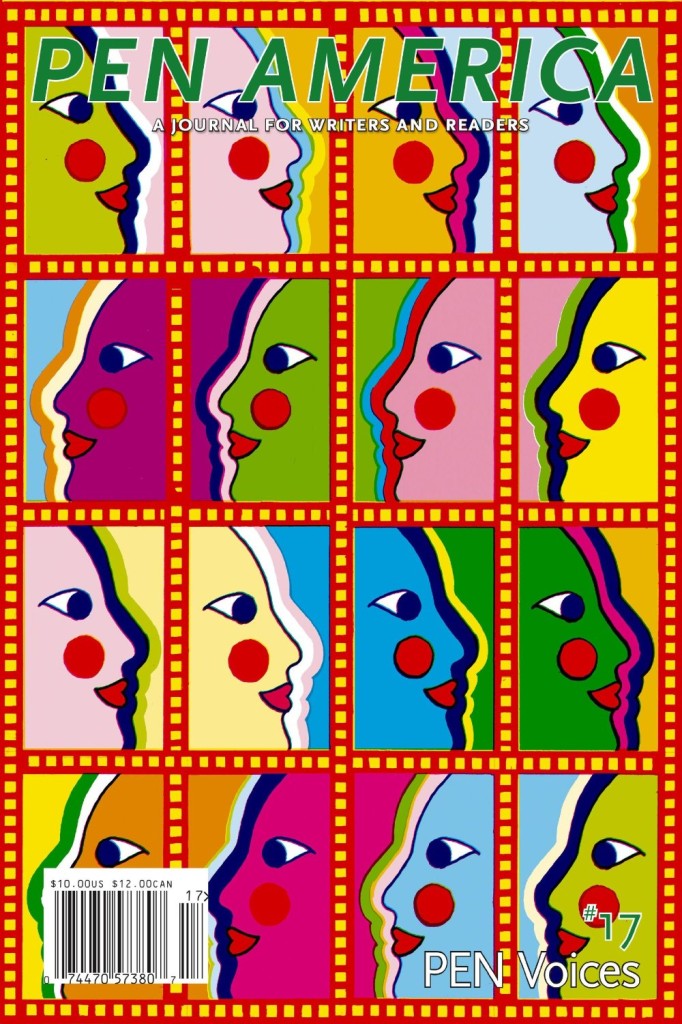
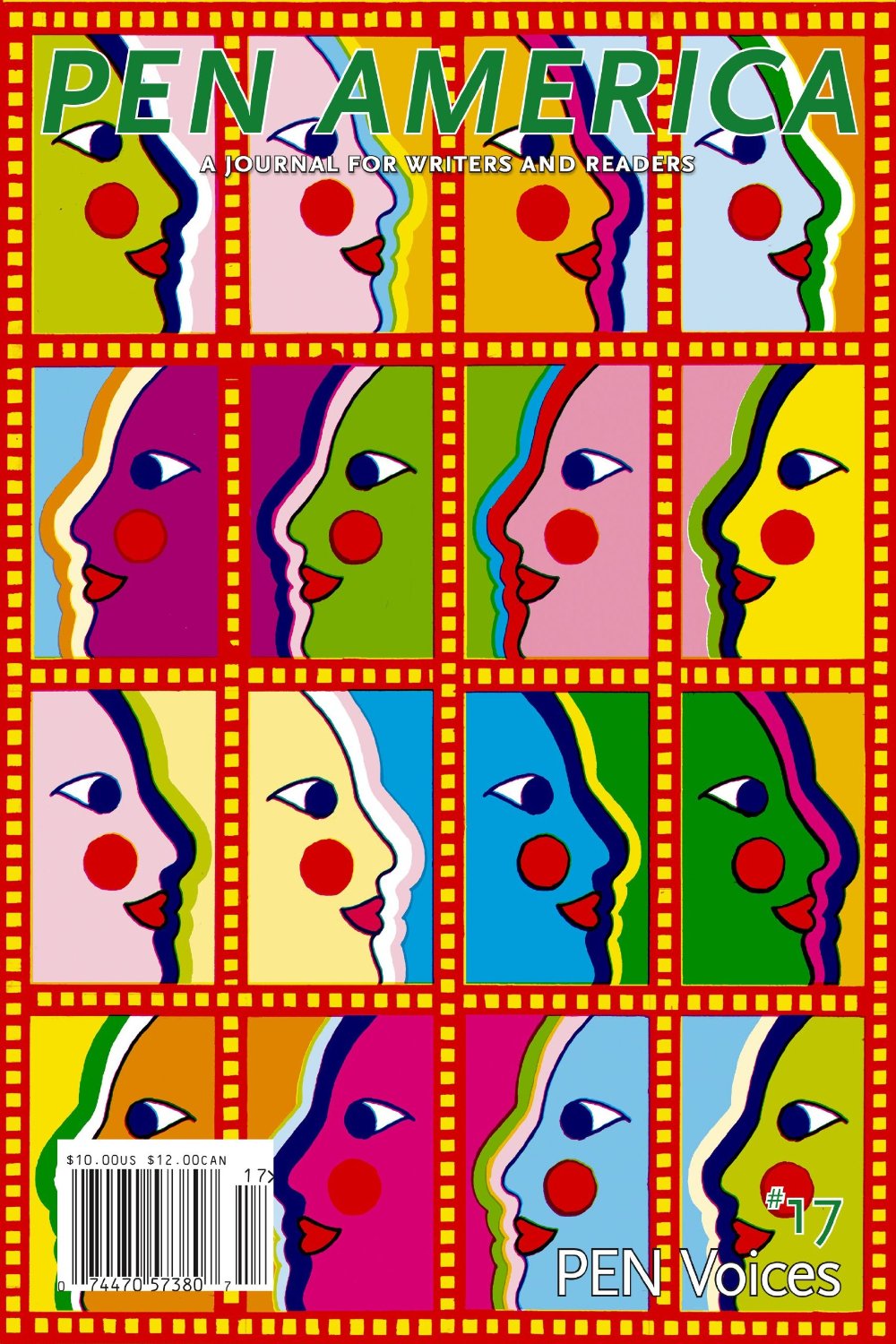
Issue #17 of PEN America, devoted to the World Voices Festival, features several of last year’s PEN/Heim Translation Fund Grant winners, including my translation of Jean Ferry’s “On the Frontiers of Plaster,” also available online at the PEN site. The piece was first published (in a slightly different form) in issue #3 of the magazine formerly known as The Coffin Factory, now Tweed’s.
Interestingly enough, Paul Bowles also translated the piece, and named his volume of translations after it: She Woke Me Up, So I Killed Her. This retitle is taken from the unattributed epigraph to Ferry’s piece, and differs from my own translation in its interpretation of that famous French conundrum, the imperfect tense. Bowles’ volume of translations from Spanish and French is interesting for the liberties it takes as well as its eclectic selection, which includes work by Borges, surrealists Giorgio di Chirico and René Magritte, poet Francis Ponge, Ramón Sender, and another personal favorite of mine, baroque fantasist André Pieyre de Mandiargues. Maybe someday a famous translator will be able to publish an equally eclectic and idiosyncratic volume of Selected Translations. One can hope.
April 30th, 2014 § § permalink
Now live online, the latest incarnation of Fiction France: VERSO. Formerly a print publication of the Institut Français (IF) that highlighted the latest French literary releases with translated excerpts, it now continues its mission in virtual form. The Institut is an arm of the Ministry of Foreign Affairs.
I translated four excerpts from the latest round of books:
Lola Lafon’s The Little Communist Who Never Smiled, a critical-biographical novel of Nadia Comăneci. Personally, this was the most fascinating title for me. It really tackles head-on, through the gymnast’s story, issues of celebrity and our culture’s exploitation of little girls.
Rising star Arthur Dreyfus takes on Foucault with his History of My Sexuality, an innovative gay novel.
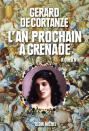
In the magical romance Next Year in Granada, Gerard de Cortanze traces, from the Moorish conquest of Spain to the present day, the life of a single Jewish girl who becomes the living embodiment of her people’s memory.
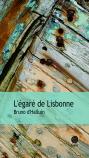
Bruno d’Halluin pulls off a similar feat of research in The Lost Man of Lisbon, a historical adventure set in the Age of Exploration.
April 28th, 2014 § § permalink
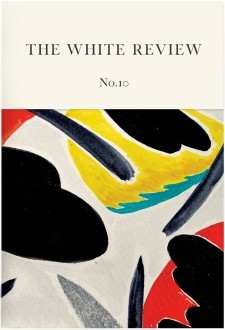
Now out in Issue 10 of The White Review, my translation of the title essay from Jean-Philippe Toussaint’s book of essays Urgency and Patience, forthcoming from Dalkey Archive. An excerpt:
I like that moment at dawn when you cautiously open the manuscript of a book in progress, in a house still asleep. There are several strategies for trying to see the work with a fresh eye, to surprise it, catch it unawares, as if seeing it for the first time, to judge it with an unbiased eye. A nap can do the trick; a good night’s sleep is even better. I even suspect that part of reading a book over can happen during sleep. When you’re awake, a book etches itself into the brain with the precision of a chess position, but when you sleep at night, the study of variants continues, as with a computer you leave on to examine the immensity of the calculations in play in an operation (such that sometimes the answer comes to me on waking without any particular conscious effort). But no point doggedly deleting without end; only time truly cleanses and renews one’s vision. According to Palma the Younger, Titian always turned his paintings to the wall for months at a time without looking at them. Then, when he took them up again, ‘he would examine them with strict attention, as if they had been his mortal enemies.’ Oh, dear mortal enemies!
Toussaint needs little introduction as an author–he is, in his own words, “really famous, though no one knows about it”–but just in case: the Belgian writer and filmmaker’s eleven books have been translated into more than twenty languages and won numerous literary prizes, including the Prix Médicis in 2005 for his novel Running Away, and the Prix Décembre in 2009 for The Truth about Marie, the two middle books of the Marie tetralogy (both translated by Matthew B. Smith).