Game for Swallows on Year’s Best List

January 2nd, 2013 § 0 comments § permalink

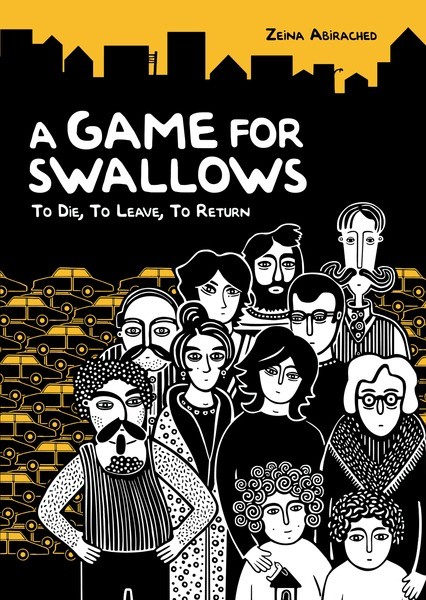
At Comic Book Resources, Zeina Abirached’s A Game for Swallows finds a comfy home at #44 on the year’s best list, just behind Ed Piskor’s Wizzywig, a book I much enjoyed from Top Shelf, and a compilation from the Rucka run on The Punisher & Punisher War Zone. I wish there were some pithy and thematically appropriate conclusion to be drawn from this, but meanwhile… thanks to Alex Dueben for saying

“Abirached tells the story of the Lebanese Civil War from the perspective of a child, telling the story of a single apartment building in a single night. Visually dynamic, with more tension than most thrillers, it is a powerful tale about events that resonate to this day.”

Last Days of An Immortal Makes Waves

January 1st, 2013 § 0 comments § permalink

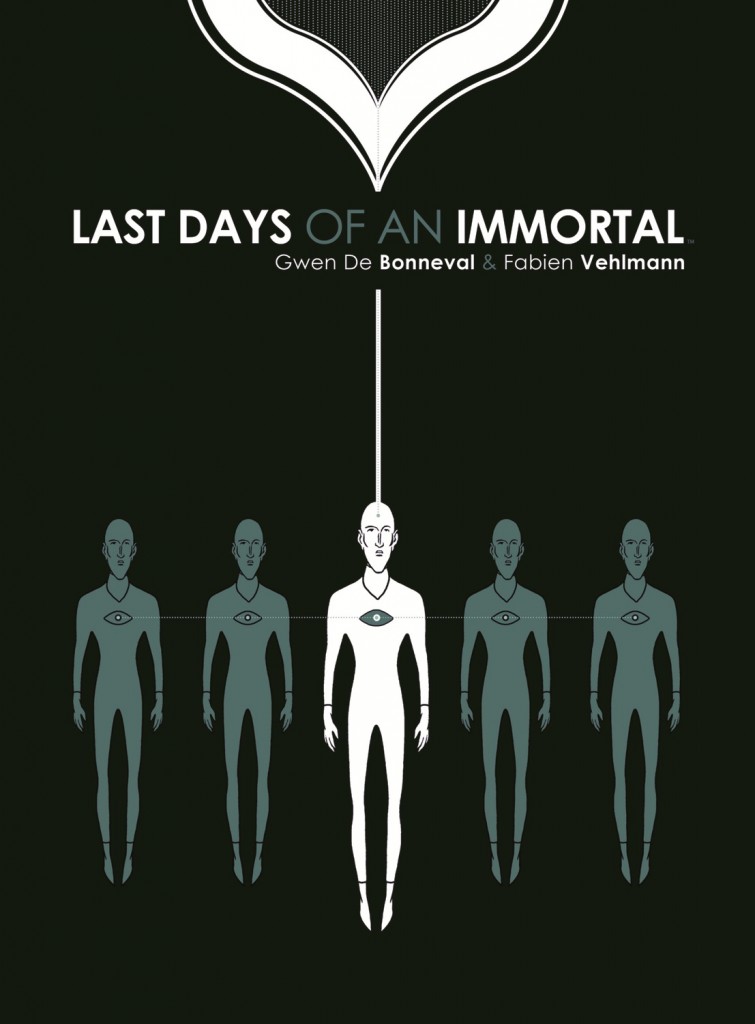
Happy New Year! Surfacing from holiday silence and post-food sloth with good tidings: Archaia’s Last Days of an Immortal has started to pick up momentum following its late fall release with a starred review from Publishers Weekly and thoughtful, effusive commentary elsewhere on the interwebs.

Subtle, mature, and inventive, French team De Bonneval and Vehlmann deliver deliberate science fiction that evokes the classic books of the 1950s and 1960s, with a particular kinship to Michael Moorcock’s Dancers at the End of Time series.

De Bonneval’s art cleverly recalls Artzybasheff and other “googley” ’50s SF masters, while the story mirrors that era’s sly social satire, which investigated how technology affected our psychology and relationships and, in turn, where that brought culture. Vehlmann’s story expands on this heritage with a smart new twist.

Jason Wilkins of Broken Frontier says

The product of French collaborators Fabien Vehlmann and Gwen De Bonneval, Last Days of an Immortal is another beautifully realized European import brought to North American readers by Archaia Comics and further proof we’re still a little behind our neighbours across the Atlantic when it comes to diverse and eclectic funny book content. A thought-provoking fusion of high science fiction and pop philosophy, Last Days of an Immortal explores such weighty themes as extra-terrestrial multiculturalism, cloning, immortality, and the convoluted legalities that arise from these ideas.

One part philosophical treatise, one part high-concept sci-fi police procedural, Last Days of an Immortal is a quiet, reflective exploration of what it means to remain human when the world around us is in a state of constant flux and we ourselves refuse to change. A poignant and pointed metaphor for the fast-paced digital age we currently wade through, Last Days of an Immortal is a refreshing break from the mainstream current obsession with universe-spanning events and reboots. Highly recommended for the pop philosopher in all of us.

and Scott Marshall at Publish or Perish adds

Last Days of an Immortal is an ingenious piece of writing wrapped in an imaginative art style that creates a vision of the future that is both contemporary and quaintly old-fashioned, as if a graphic novel had arrived from the era of Aldous Huxley. Long may it survive.

London comix blog The Gosh! has linked to my two-part discussion of genre and Last Days at Weird Fiction Review.

Congrats to creators Fabien Vehlmann and Gwen De Bonneval!

Lots of love for A Game for Swallows

December 20th, 2012 § 0 comments § permalink

A Game for Swallows is getting lots of local and international love. It made World Literature Today‘s year-end Notable Translations list for the year. Huge congrats to all the authors and translators so honorably mentioned!

Nicole Cipri at Gozamos, a Chicago culture blog, makes astute observations about Abirached’s use of negative space on both thematic and pictorial levels.

Such emptiness inspires a sort of pensiveness, an uncertainty. It reminds us of our own smallness and insignificance, particularly when viewed through the wide lens of history…
It’s telling, then, how much negative space Zeina Abirached uses in her graphic memoir, A Game for Swallows. Uncertainty and worry infect each page. Abirached was born during the Lebanese civil war, a conflict that lasted nearly fifteen years and claimed 120,000 lives…
The artwork is full of strong lines and patterns, bordering on whimsical, and reminiscent of Islamic geometric designs. We never see a bomb, a gun, or a pool of blood, perhaps because this is a child’s recollection. Instead, there is that negative space, that sense that one lacks control.

The Provo, Utah Library blog says:

This black and white look at one night of life in war-torn Lebanon is a touching, important book, as it tells the stories of not only the children but also the neighbors and how they’ve been impacted by the war.

Thanks to Words Without Borders and PEN America for believing in this book from the beginning, and running excerpts that helped convince publishers to take it on. Thanks much to Nicolas Grivel, the French Voices grant program, the editorial team at Lerner, and author Zeina Abirached herself for making this book happen!

December is Crime Month at Words Without Borders

December 1st, 2012 § 1 comment § permalink

I had a friend in film school who always said that assembling-the-team montages were his favorite part of movies, from westerns (The Magnificent Seven) to war movies (The Dirty Dozen), and of course classic crime flicks. I think we were discussing The Usual Suspects. For him, those segments were the high point—pure potential—and even though the actual adventure had yet to start, it all went downhill from there. Which is likely literally true of noir.

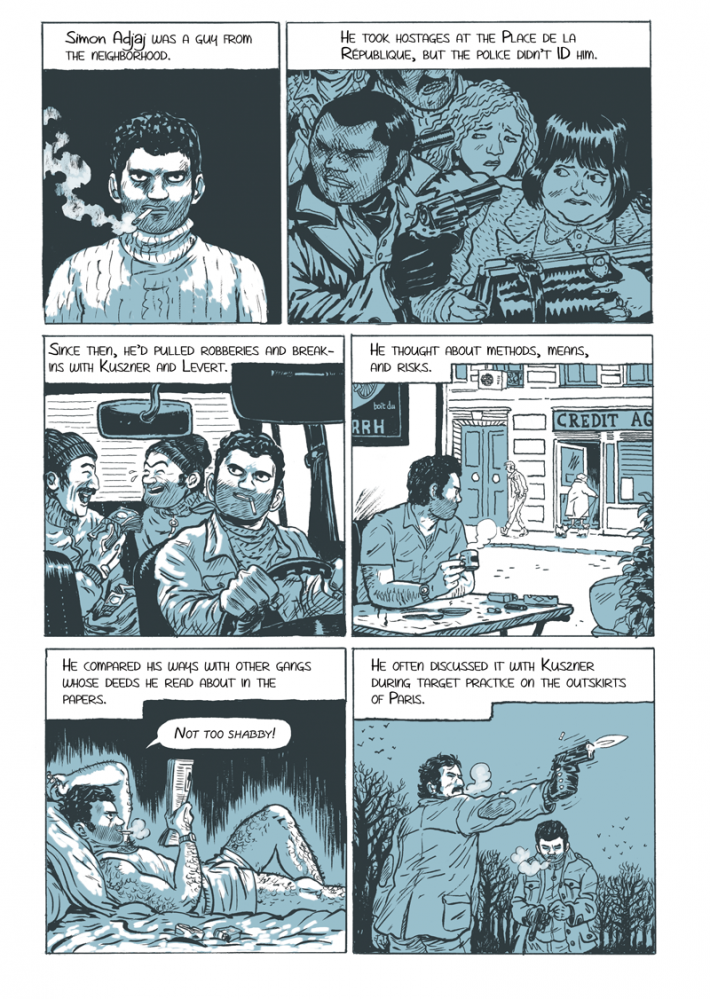
Maybe I took his words to heart? Because the excerpt I carved out and translated Les Faux Visages (Futuropolis, 2011) is exactly that: putting the gang together. Every crook gets his brief, cutaway bio setting up character and history as the camera pans around the room where they’ve gathered to discuss the next job. All the usual suspects are indeed there: the smooth gangster, the young hoodlum, the safecracker, the munitions man, the cat burglar… and, this being a David B. script, the reference to some great fabulist: in this case, Marcel Schwob. Himself a writer fascinated by violent brigands and their colorful argot, Schwob was a major influence on Borges’ Universal History of Iniquity.

Penned by David B. with art by Hervé Tanquerelle, False Faces is based on the true history of the Wig Gang, audacious Parisian bank robbers who had an unbroken string of successful holdups in the early 80s. Some of them are still at large today.

The excerpt is live in the December issue of Words Without Borders. Check it out!

Awesome Sauce for Thanksgiving

November 24th, 2012 § 3 comments § permalink

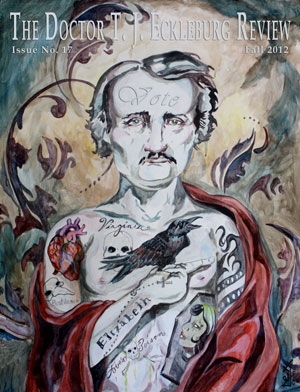
Poe in Goth Ink by Lex

Editor Rae Bryant of The Dr. T.J. Eckleburg Review announced her magazine’s pick-six nominations: the pieces, from among all those published, that will be forwarded for consideration to this year’s Pushcart Prizes. Here they are:

Fiction
Excerpt from His Wife Leaves Him by Stephen Dixon
“You’re an Ugly Crier” by Megan Giddings
“The Nonsense Singers of the Red Forest” by Rick Moody

Nonfiction
Excerpt from Something Wrong with Her: A Hybrid Memoir by Cris Mazza

Poetry
“Portrait d’Erik Satie” by Moira Egan

Translation
“The Women Who Watch” trans. by Edward Gauvin

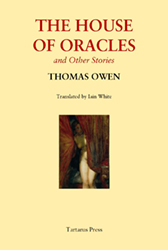
I’m terribly flattered to be nominated–my first!–from all the amazing work that has appeared in the magazine this year. Congrats to all nominees, and best of luck for the next round! What amazing company for Thomas Owen to be in! How often would you see him in a context with Dixon and Moody? Owen is a towering figure in Belgian supernatural fiction, and I hope the story will lead readers to seek out more of his work. His fans have reason to rejoice this season, since the most excellent indie British publisher Tartarus Press, fresh off their third World Fantasy Award, is bringing the only English volume of Owen’s short stories back into print. In 1984, William Kimber published The Desolate Presence, an anthology elected from six collections and several decades of work by Iain White, to whom we owe translations of other pioneering fabulists like Jean Ray and Marcel Schwob. The book has since become a collector’s item, the few circulating copies commanding steep prices. Tartarus is reprinting White’s selection with seven newly translated stories, retitled as The House of Oracles. The volume will bear all the hallmarks of Tartarus’ loving production: sewn hardcover binding, silk ribbons, and original art.
Fans looking for other free work by Owen online should check out my translation of “Kavar the Rat” at Weird Fiction Review. Or, longing for a fine audio versions of both these tales? Check out “Kavar” read by David Rees-Thomas and “The Women Who Watch” read by Pete Milan at the horror podcast Pseudopod.

The Dr. T.J. Eckleburg Review is the reincarnation, under the aegis of Johns Hopkins, of The Moon Milk Review, but its change in title inspiration from Calvino to Fitzgerald in no way construes a lesser commitment to fabulism, of which Rae Bryant offers a spirited defense on the occasion of Mo Yan’s Nobel Prize.

Eckleburg, whose first two issues featured Belgians Thomas Owen and André-Marcel Adamek, is one of two revues in whose recent launches I’ve been lucky enough to participate, the other being The Coffin Factory, whose first three issues featured Bernard Quiriny (also in Subtropics, World Literature Today, and Best European Fiction), Maurice Pons (also in Tin House), and Jean Ferry (whose collection The Conductor is forthcoming). Eckleburg is gearing up for its third issue (#18) next year, and the leap from online to print.

Congrats again to the nominees, and a huge thanks to all involved!
Checking in on Châteaureynaud

November 18th, 2012 § 0 comments § permalink

The coming year should bring more Châteaureynaud to his American fans—newly translated stories in at least two anthologies—and I should finally be finishing the novel follow-up to the 2010 story collection. Meanwhile, in a review at that clearinghouse of all translated lit, Three Percent, Catherine Bailey has these kind words for A Life on Paper:

Like those master storytellers whose haunting tales were exaggerated by the play of their hands over the flame, Châteaureynaud makes expert thematic use of both light and shadow to reveal his fantastical realms of wonder and fear. His unassuming prose startles as it entrances, holding readers on the edge of elegantly rendered, fantastical dream-worlds while all at once alluding to their more nightmarish qualities. In the style of Kafka and Poe, Châteaureynaud makes the supernatural seem not only present, but ubiquitous, inclined to encroach at any moment on the humdrum lives of unsuspecting mortals. More sinister than fairy tales, yet not quite definable as horror stories, Châteaureynaud’s whimsical writings leave one unsettled and alert, appreciating anew the possibilities of the chilly night air while simultaneously feeling the urge to draw nearer to the fire—just in case…

The border between fantasy and obsession in these stories is never fixed, and some of the humans in Châteaureynaud’s fiction rival his ghosts, goblins, and spooks in their ability to make a reader shiver.

Perhaps it is for that reason that some of the most successful stories in this collection—a sampling chosen from other 30 years of Châteaureynaud’s work—focus not on the mysteries of the supernatural, which the author never seeks to rationalize, but on the intricacies of his human subjects. Whether taken metaphorically or literally, the vignettes in which mystical interludes catalyze or coincide with poignant emotional development in lead protagonists are some of Châteaureynaud’s richest and most memorable.

In case you missed it, Levi Stahl offers up a trenchant appreciation of Châteaureynaud’s short-short “A Citizen Speaks,” which opens the collection.

It’s a lesson in concision, in the way that allowing a voice to speak to the reader as if we already share a substantial amount of underlying knowledge of his world can allow a writer to cut right to the uncanny details of that world; the flat, matter-of-fact tone that results only emphasizes the strangeness of the situation being revealed. Dread edging into horror in two pages—that’s an achievement.

I’d love to hear his take on the rest of the book.

A Game for Swallows makes The New York Times!

November 14th, 2012 § 0 comments § permalink

From Pamela Paul’s review of Zeina Abirached’s A Game for Swallows:

Less a story than a portrait of a family and a city and a culture under siege, the narrative unfolds somewhat disjointedly, intentionally perhaps — as a means of conveying the haphazard and precarious nature of life in a city beset by civil war…

…the afternoon of waiting for the parents’ return remains grimly tense (a scene in which the family and neighbors call out “Incoming!” and “Outgoing!” in response to the explosions outside is terrifyingly real, with the characters faces falling slack during moments of silence and panicked when the bombs explode). The profound dislocation of living in a war zone is palpable on every page. And an ominous question hangs over it all: Will Abirached’s parents return? And if they do, what exactly will they be returning to?

The book’s strengths are myriad. Abirached is a lovely artist, and her characters’ faces are remarkably expressive. There is much humor, a welcome relief from the chaos and heartache of the human stories within.

For young readers, “A Game for Swallows” will come as a revelation. At a time when the Middle East is still in turmoil and when Americans have suffered losses of electricity and other necessities during recent storms and floods, this is a story that will hit home even as it causes young, impressionable eyes to look at life abroad.

Billy Fog in MUSE Magazine

November 12th, 2012 § 0 comments § permalink

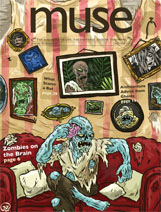
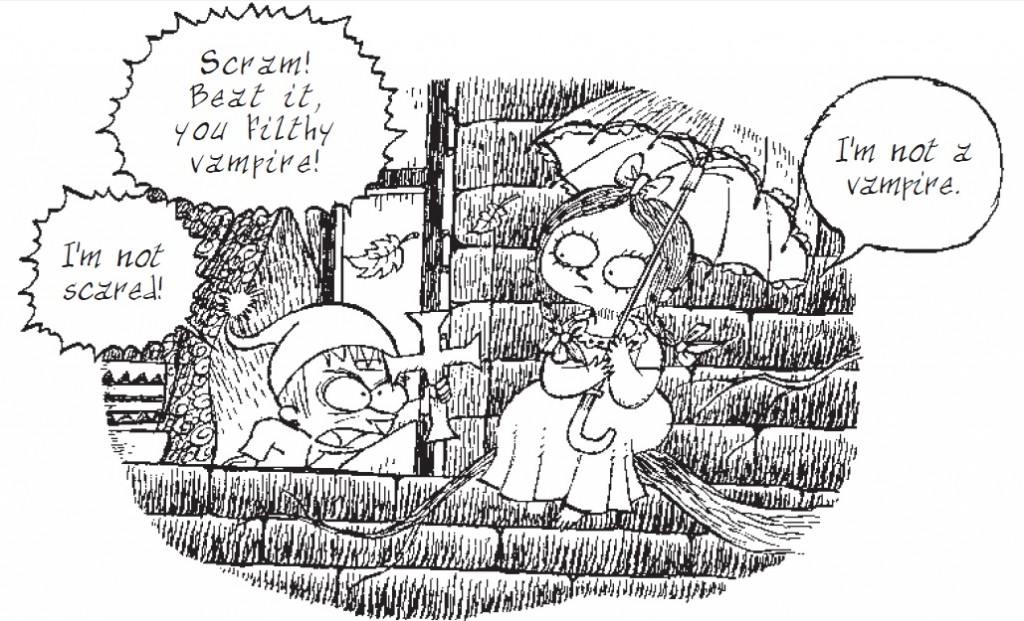
We’re almost midway through the next month already, but in case you missed it, there’s still time to pick up last month’s MUSE — “The Magazine Life, the Universe, and Pie Throwing” — for the kid in your life (or in you). MUSE is the ages 10-and-up member of the venerable Carus periodical family that includes such childhood favorites as Cricket and Cicada. The October, zombie-themed issue of MUSE features a brief excerpt from Billy Fog, featuring Lea the Ghost:

I’ve been touting this graphic novel ever since I first translated it. It came out last January, and would make for a great Christmas gift, hint hint… I think of it as Edward Gorey meets Calvin & Hobbes. The death of Billy’s beloved pet cat Tarzan sends him on a quest to “find out the secret of death.” He’s convinced that if anyone knows, it must be Santa, since he’s been around so long, and writes him a letter demanding the secret for Christmas. There’s a nice balance of the gruesome and the cheery. Author Guillaume Bianco tells this story not only through traditional comics pages with panels and speech balloons, but regular excerpts from a Quibbler-type “Gazette of the Bizarre,” macabre Shel- Silverstein-type poems, and entries from Billy’s own imagined bestiary (which includes ghosts, boogeymen, monstrous insects, and even kid sisters). It’s a tremendous feat of world-building, not only graphically but verbally inventive -— Bianco’s knack for wicked ostentation and morbid understatement come through not only in his pictures but his words. Slugs and snails and puppy dogs’ tails —- these are all present, along with princesses that sprout from squmkins, super-hoodies, vegetarian vampiresses, murderous moppets, Maupassant, Ouija boards, and seamstresses who put their eyes out with scissors.

THE WEIRD Double Header

November 4th, 2012 § 0 comments § permalink

Congratulations to all this year’s World Fantasy Award Winners, just announced today, especially

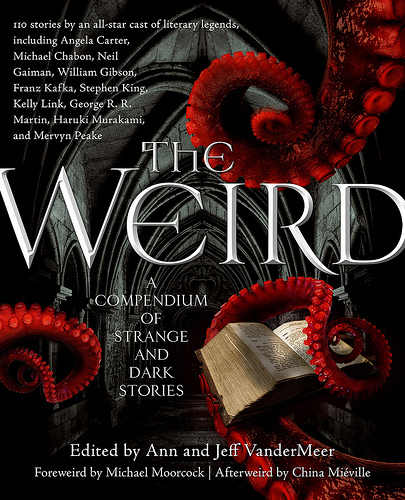
  • Ann & Jeff VanderMeer in the Best Anthology Category for The Weird
  • Raymond Russell & Rosalie Parker, in the Special Award—Non-professional category for running Tartarus Press
  • Eric Lane, in the Special Award—Professional category for publishing in translation – Dedalus Books. Yay translation!

Congratulations as well to Ann & Jeff VanderMeer‘s The Weird for taking the British Fantasy Award for Best Anthology earlier last month! I’m proud to be part of their crackerjack team at Weird Fiction Review! (I made a new category for it in the sidebar. Also, Part II of my piece on genrebending and The Last Days of An Immortal goes up there tomorrow! Check it out!)


Adamek at Eckleburg

October 31st, 2012 § 0 comments § permalink

Poe in Goth Ink by Lex

The late André-Marcel Adamek, who died in January, would like to wish you a Happy Halloween from beyond the grave with his mean and mournful tale, “Barnaby’s Goose,” in Issue 17 of The Dr. T.J. Eckleburg Review (formerly The Moon Milk Review), out as of today. Here’s an excerpt:

The goose soon revealed her terrible nature as a merciless conqueror. At barely six months of age, she picked out the only pretender to absolute power in the courtyard, an Irish cock redder than a ripe strawberry who violated each of the frail hens under his watch thrice daily. He carried out these misdeeds casually, falling on his prey with his claws and giving each a few solid thrusts with his rump before wandering off like a tabernacle saint, soul at ease and loins voided.

Nelly, whose head hovered three inches over the rooster’s comb, didn’t even bother challenging her rival to single combat. While he was rummaging about in the dungheap, chuckling like a senator, she lunged at his genitals, and with a twist of her neck tore off his male wiles, which she spat out disgustedly in the runnels of slurry before reassuming her noble, immaculate air.

Adamek and I met but once, and I miss him. What a gentleman, what a storyteller.

The late André-Marcel Adamek, who died in January, would like to wish you a Happy Halloween from beyond the grave with his mean and mournful tale “Barnaby’s Goose.” We met but once, and I miss him. What a gentleman, what a storyteller.

The late André-Marcel Adamek, who died in January, would like to wish you a Happy Halloween from beyond the grave with his mean and mournful tale “Barnaby’s Goose.” We met but once, and I miss him. What a gentleman, what a storyteller.