November 22nd, 2013 § § permalink
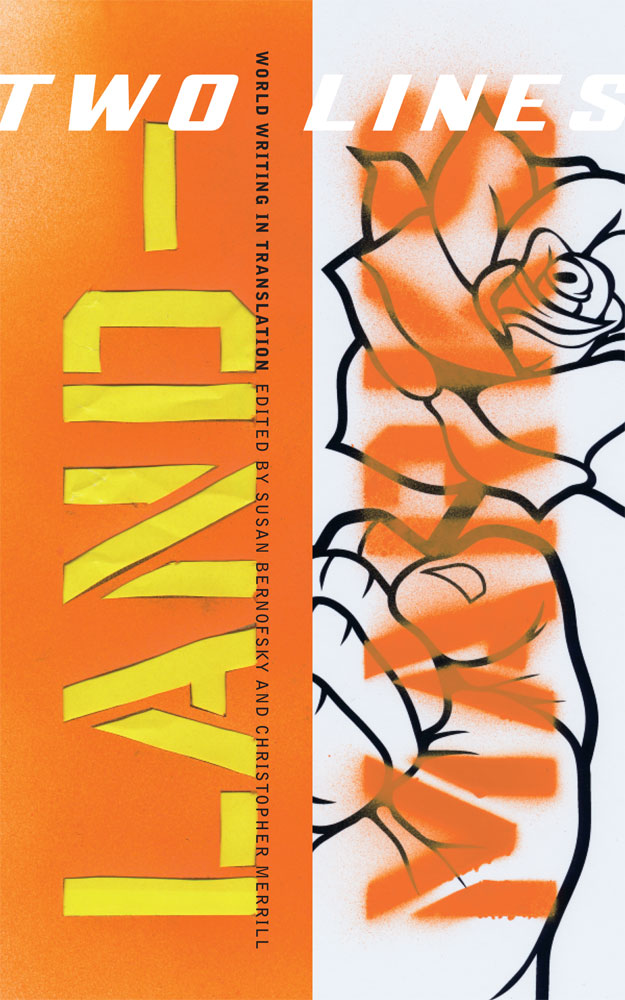
Failure is one of my favorite themes, and marks many of my favorite stories, from The Great Gatsby to The Venture Bros. Landmarks, the latest volume of Two Lines, that estimable annual from San Francisco’s Center for the Art of Translation, is now out. Edited by Susan Bernofsky and Christopher Merrill, it features my translation of the story “What Happened to You?†by Pierre Mertens, a sophisticatedly bitter rumination on the promise of youth and its wastrel sequels. My translations of a chapter from Patrick Besson’s historical novel The Brotherhood of Consolation and François Ayroles’ short comic “I’m So Happy…†appeared in Two Lines XV: Strange Harbors and Two Lines XVI: Wherever I Lie is Your Bed, respectively.
Born in 1939, Pierre Mertens is Francophone Belgium’s perennial Nobel hope. He has published more than thirty works of fiction, drama, and essays. A specialist in international law known for his involvement in human rights, he runs the Center for the Sociology of Literature at the Université Libre de Bruxelles, and is a literary critic for Le Soir. His first novel, L’Inde ou l’Amérique (Seuil, 1969), won the Prix Rossel, Belgium’s top literary prize. His novel on German Expressionist poet and Nazi collaborator Gottfriend Benn, Les Éblouissements (Seuil, 1987), was awarded the Prix Médicis and translated by Edmund Jephcott as Shadowlight (Peter Halban, 1997). His novel Une paix royale (Seuil, 1995) earned him a libel lawsuit from the Belgian royal family. He is a member of the Belgian Royal Academy of Language and Literature and a Chevalier de l’Ordre des Arts et des Lettres of France.
Here’s an excerpt from the story:
During all this time, things had changed for me too, unexpectedly and in the other direction. While others failed, I climbed the rungs of renown. (As though I’d boarded a train through whose windows I could, with a lump in my throat, contemplate a train on another track, at first parallel, then veering off, growing distant in the mist, becoming a ghost train bound for nothingness. In the time it took to pick out faces once familiar, even beloved, their features blurred, crumpled. Were they soon to fade from memory?) Oh, I succeeded almost despite myself. Without putting too much stock in it. First to be surprised… My life was turned completely upside down. Far too completely. Yet not completely enough, I suppose. As recently as last year, on the Rue de Verneuil, I ran into Patrice Bergeron, my best friend from the Lycée St.-Exupery in Lyon, who launched right into the story of his life, his marriage, his divorce, his layoff as advertising agency exec, and then, in fine, asked me no doubt from mere politeness, “But hey, old pal, what happened to you?â€
November 21st, 2013 § § permalink

or rather, the Lannan. Hidey-holed up snugly away in the high west Texas desert of Marfa, where everything is Marfa-lous…

November 20th, 2013 § § permalink
Belgian fabulist Thierry Horguelin’s story “The Man in the Yellow Parka” has been crowned with two U.S. publications, in the latest issue of Eleven Eleven (#15) and Dalkey Archive’s Best European Fiction 2014, edited by Drago JanÄar. Both are available now!
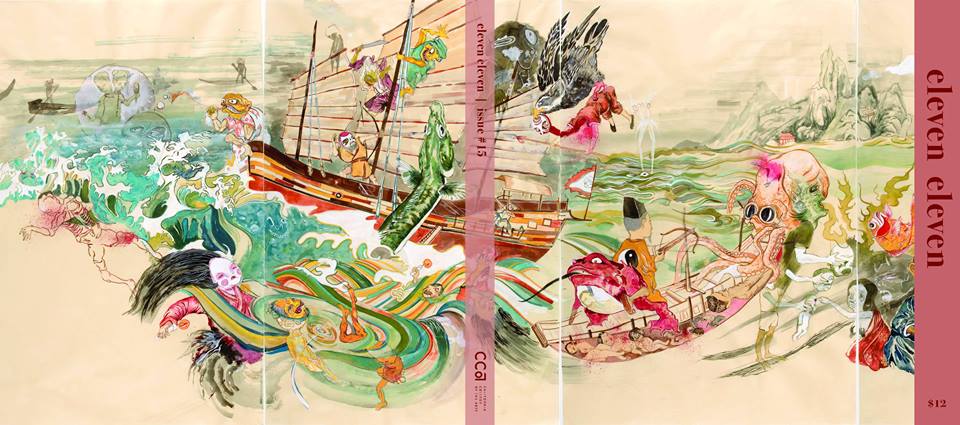
Horguelin’s work was first (and last) seen in English in Birkensnake #4. “The Man in the Yellow Parka†is from his 2009 collection The Endless Night published by Quebec’s L’Oie de Cravan press, and winner of the Franz de Wever prize for best collection from the Belgian Royal Academy. “Parka” is a very contemporary fantastical puzzler of alternate realities, obsessive TV fandom, and the hazards of the images that keep us all enthralled. Here’s an excerpt:
It’s strange to watch a film or series while focusing on the backgrounds and edges of the frame. You develop a curious attentional walleye, and realize that most of the time you don’t really watch movies. On one hand, you keep following the unfolding plot despite yourself. You register names, facts; you sense a twist coming up; you figure out who’s guilty. On the other, you find that even the most conventional fiction is full of bizarre, surprising, incongruous, or simply poignant details, sometimes deliberately arranged by the director—whose reasons aren’t always clear—sometimes recorded unbeknownst to him by the camera, like the short-haired girl in Intimidation: fleeting, fragile moments, gestures all the more precious for being involuntary, forever imprisoned in the frame… Aren’t these, at heart, our most secret reason for loving movies? I noticed several such details in Simple Cops. Monica, the pretty precinct receptionist, had an inexhaustible collection of sweaters. She wore a new one every episode. Thaddeus, Bauer, and Mentell were all left-handed—three lefties on the same show? And what to make of the excessive proliferation of watches, wall clocks, clock radios, sometimes shot in close-up when suspense demanded it, but more often in the background or the edges of the frame, like a furtive, barely hinted obsession? And how to take all that graffiti in the form of cries for help—“Help!â€, “Get me out of this!â€â€”which showed up at regular intervals in exterior shots, spraypainted on walls or scribbled hastily in phone booths?
Horguelin runs an interesting blog, Locus Solus: check it out!
November 19th, 2013 § § permalink
for their continuing coverage of Jean Ferry’s The Conductor and Other Tales, forthcoming this month from Wakefield Press. Ferry’s only prose fiction collection, the book was one of this year’s PEN/Heim Translation Fund grantees. Since then, Pen has pushed it tirelessly, even putting an excerpt in a homemade chapbook for this year’s Brooklyn Book Festival in September. The PEN site also features a piece from the collection, “On the Frontiers of Plaster,†first published in The Coffin Factory (Issue #3), as well as a statement from the translator, yours truly.
Some stories from the collection are available online:
And others in print:
November 18th, 2013 § § permalink
In the Opinion Pages of yesterday’s New York Times Sunday Review, Sarah Gensburger’s “The Banality of Robbing the Jews,†translated by yours truly. Gensburger is a social scientist at France’s National Center for Scientific Research (CNRS) and the author of Images of Plunder: An Album of the Looting of Jews in Paris. An excerpt:
The contents of each apartment were divided into two groups. Damaged objects or personal ones, like papers or family photos, were burned almost daily in a bonfire at the Quai de la Gare. The other items were sorted and classified by category, rather than source. A saucepan taken from one family would be added to a stack of other saucepans rather than kept in the original set. Stripped of their provenance, items lost their identity. Belongings became goods.
October 2nd, 2013 § § permalink
October 1st, 2013 § § permalink
Some very kind words for H.V. Chao’s story “The Scene†from reviewer Bradley Winterton in The Taipei Times:
My prize for best entry overall goes to H.V. Chao’s “The Scene.†This evocation of fashionable beach life on the coast west of Ahmedabad in the Indian state of Gujarat, has enormous reserves of irony and observation.Other items may have ambition without achievement, but Chao has both. He will please the general reader and the connoisseur equally. He boasts literary sophistication, in other words, while nowhere sacrificing total accessibility. This bright vignette deserves a prominent place in his forthcoming collection.
The story is available in the inaugural issue of ThunkBook.
September 30th, 2013 § § permalink
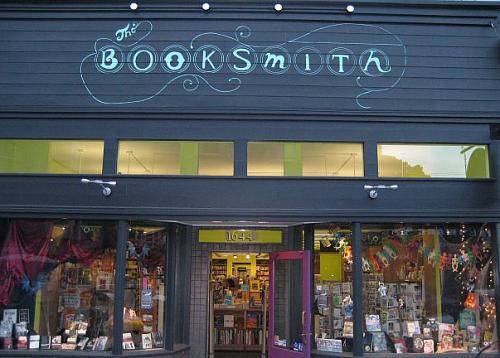
I’ll be reading from French fabulist Georges-Olivier Châteaureynaud’s story “An Occasional Icarus†tonight at San Francisco’s Haight favorite, indie darling The Booksmith. The event starts at 7:30, and the illustrious lineup includes Anthony “A Constellation of Vital Phenomena†Marra, Karen Tei “Tropic of Orange†Yamashita, and Zachary “The Lost Books of the Odyssey†Mason, who along with Châteaureynaud and forty-six other writers have stories in Kate Bernheimer’s latest anthology, XO Orpheus. This follow-up to the World Fantasy Award-winning My Mother She Killed Me, My Father He Ate Me (which tackled fairy tales) gives timeless myths a modern day spin.
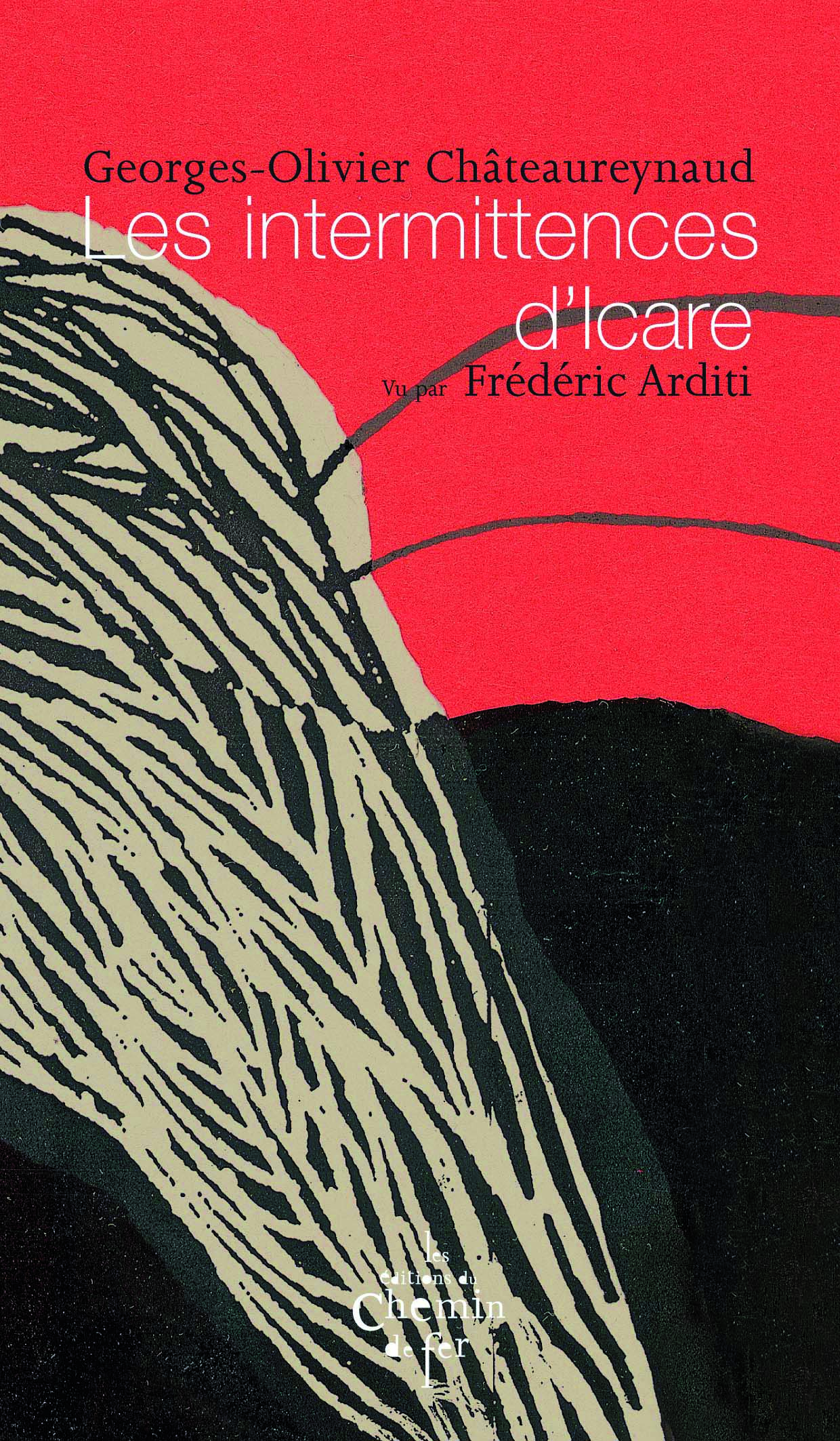
“An Occasional Icarus†is Châteaureynaud’s fifth story to appear in English since the 2010 collection A Life on Paper from Small Beer Press. It was originally published as a chapbook in 2006 by the small French press Les Éditions du Chemin de Fer, in an imprint pairing single stories by noted short story writers with illustrators.
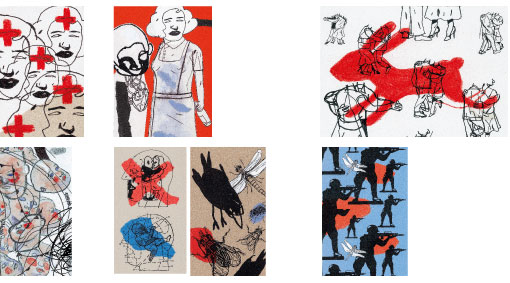
Some of Frédéric Arditi’s illustrations for Châteaureynaud’s “Les Intermittences d’Icare†can be seen above. The story will be collected this coming fall in the author’s latest book from his longtime publisher Grasset, his eighth full-length story collection: tentatively, whimsically entitled Young Codger on a Wooden Rock.
Come join us! Tonight, you can be a Haight-er.
September 24th, 2013 § § permalink
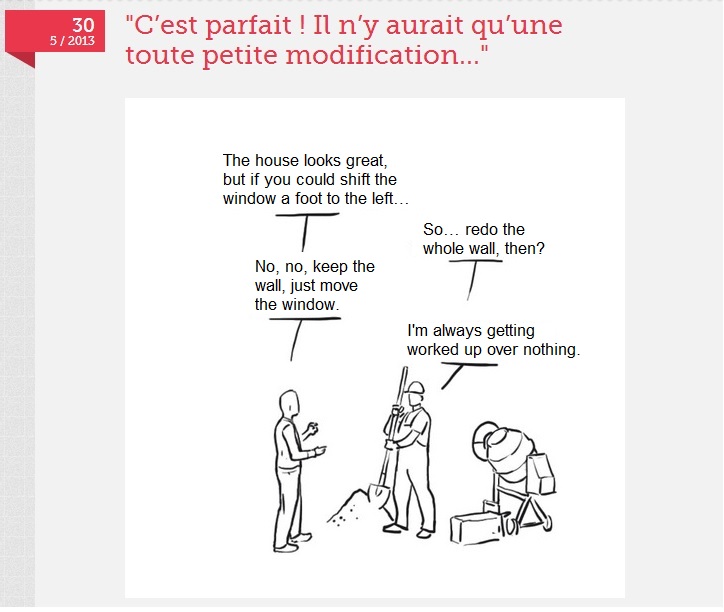
Courtesy of Mon Maçon Était Illustrateur [My Mason Was an Illustrator], a French tumblr about freelancing. English remix by yours truly.
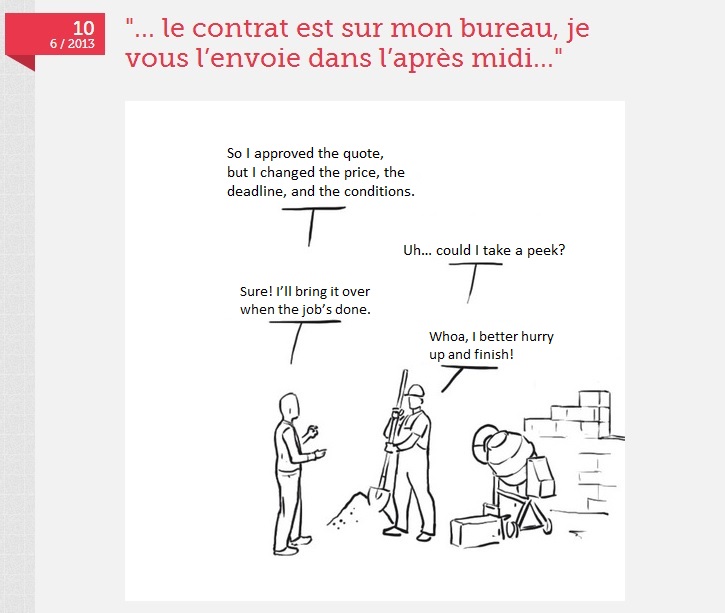
September 22nd, 2013 § § permalink
So, somewhere during a particularly busy summer workwise, I fell in love with a French tumblr hilariously lamenting the pitfalls of the freelance life. It’s called “My Mason Was an Illustrator (And He Kept Some Good Habits),” the idea being that the absurdity and abusiveness of certain contractual terms, which clients regularly ask of freelancers without batting an eye, would be plain as day if displaced into a context of more material labor. The titular mason, his submissive “good habits” intact from years of soul-crushing illustration work, knows his place. Having fully flagellated this horse of a joke past death by overexplanation, I’ll stop here, and just give an example I translated in tribute, which lends its title to this post:
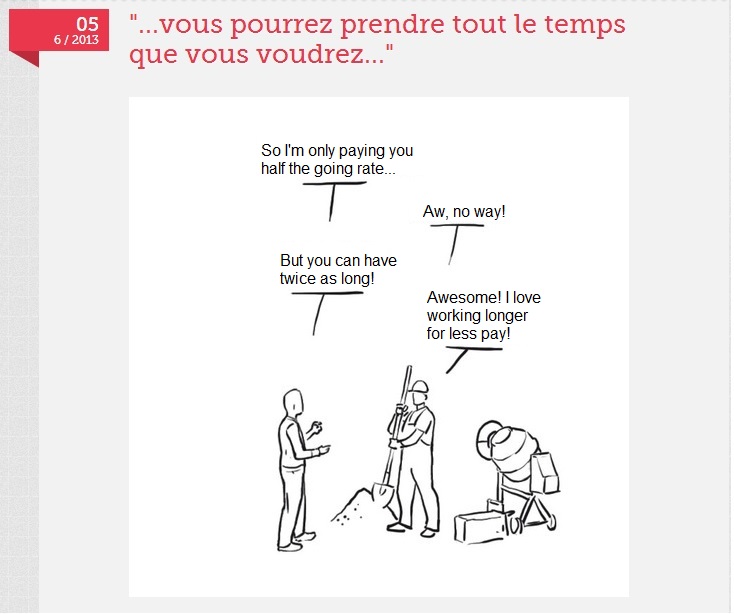
The series of simple, single-panel cartoons that with their laddered, rapid-fire dialogue and faceless figures recall a clip art Ruppert & Mulot. I won’t claim I’ve personally suffered all the indignities the Mason has at clients’ hands, but the problems depicted are very real in creative and other less “tangible” industries–which only makes the comics bitterer and funnier. The creator, who self-identifies as a “freemason-illuminatustrator,” said in an interview at the lit/design/typography review Tind, “As a doodler, I owe it to myself to be a whiner, and I love complaining. In reality, there’s nothing wrong; everything’s great.” His punchlines are similarly straightfaced.
As a creator, he anticipated my unlicensed tribute in this cartoon, a paean to web ethics: “Use this image, I love it, I found it online…”
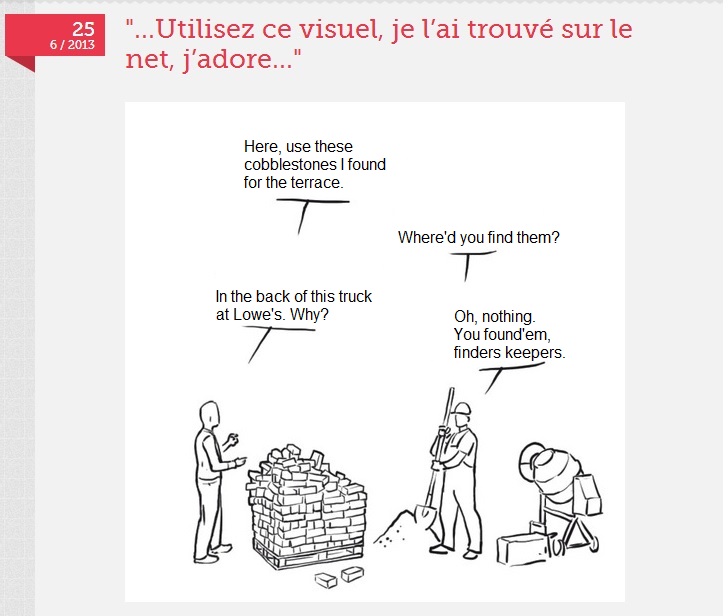
As a designer, I hope he’ll forgive me the hash I’ve made of his art with my limited means (read: Microsoft Paint) by lettering with Arial rather than Helvetica.