Comics in the Pipeline
December 7th, 2013 § 0 comments § permalink
Frederik Peeters’ Aama now out in the UK
December 5th, 2013 § 0 comments § permalink
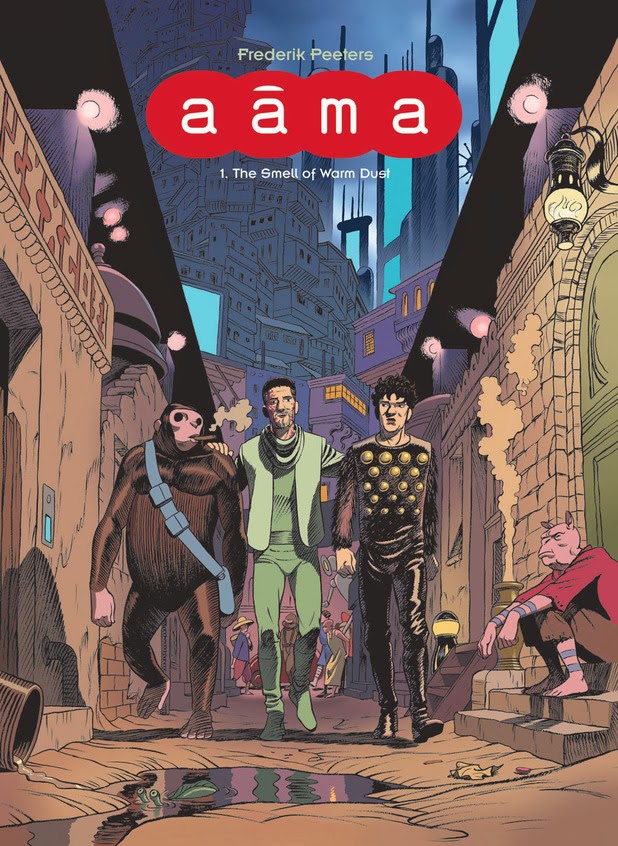
The first volume of Frederik Peeters’ SF epic Aama is now officially available in English, if only the UK (at the moment). This far-future space epic in five volumes, reminiscent of the work of Stanislaw Lem, won the best series award at Angoulême festival this year.
The first volume, The Smell of Warm Dust, finds Verloc Nim waking in an unfamiliar crater with total amnesia. He learns about his unhappy past from his old diaries and his brother’s robot ape, Churchill. His life had been in freefall: he’d lost everything because he refused to be technologically upgraded. But now he’s on a mission to another planet to retrieve a biorobotic experiment called Aama.
Peeters has been nominated at Angoulême in the best book category five times. He lives with his wife and daughter in Geneva. Publisher SelfMadeHero is fully invested in this star of contemporary French comics, having earlier brought out his works Sandcastle and Pachyderme. The current US release date for Aama Book I is March 2014.
Pics from Reading Châteaureynaud
December 3rd, 2013 § 0 comments § permalink
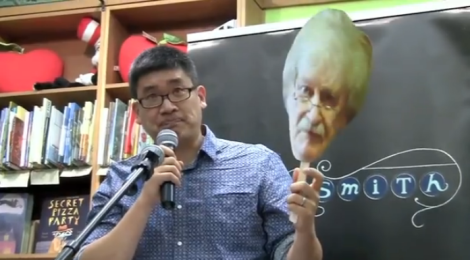
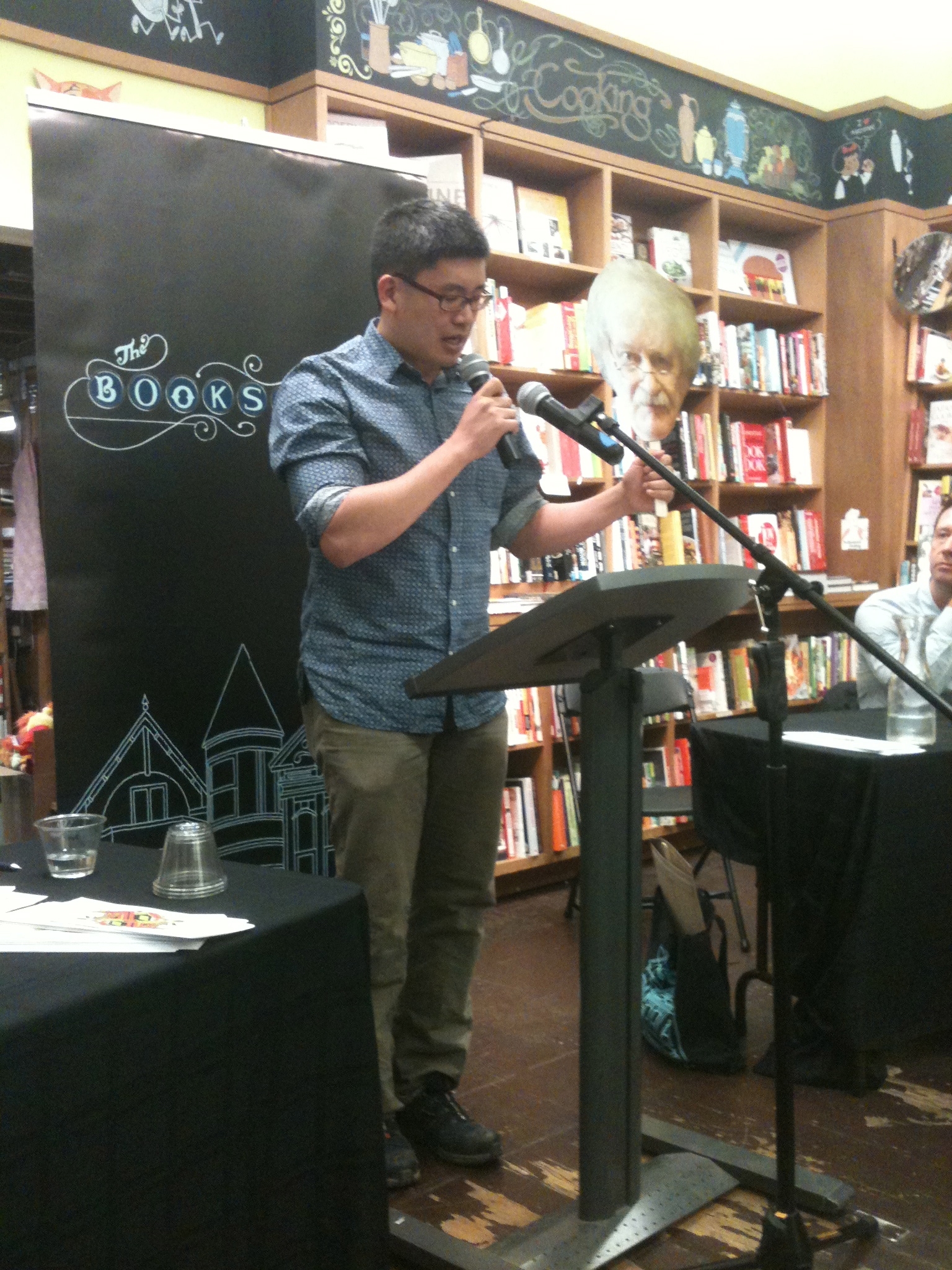
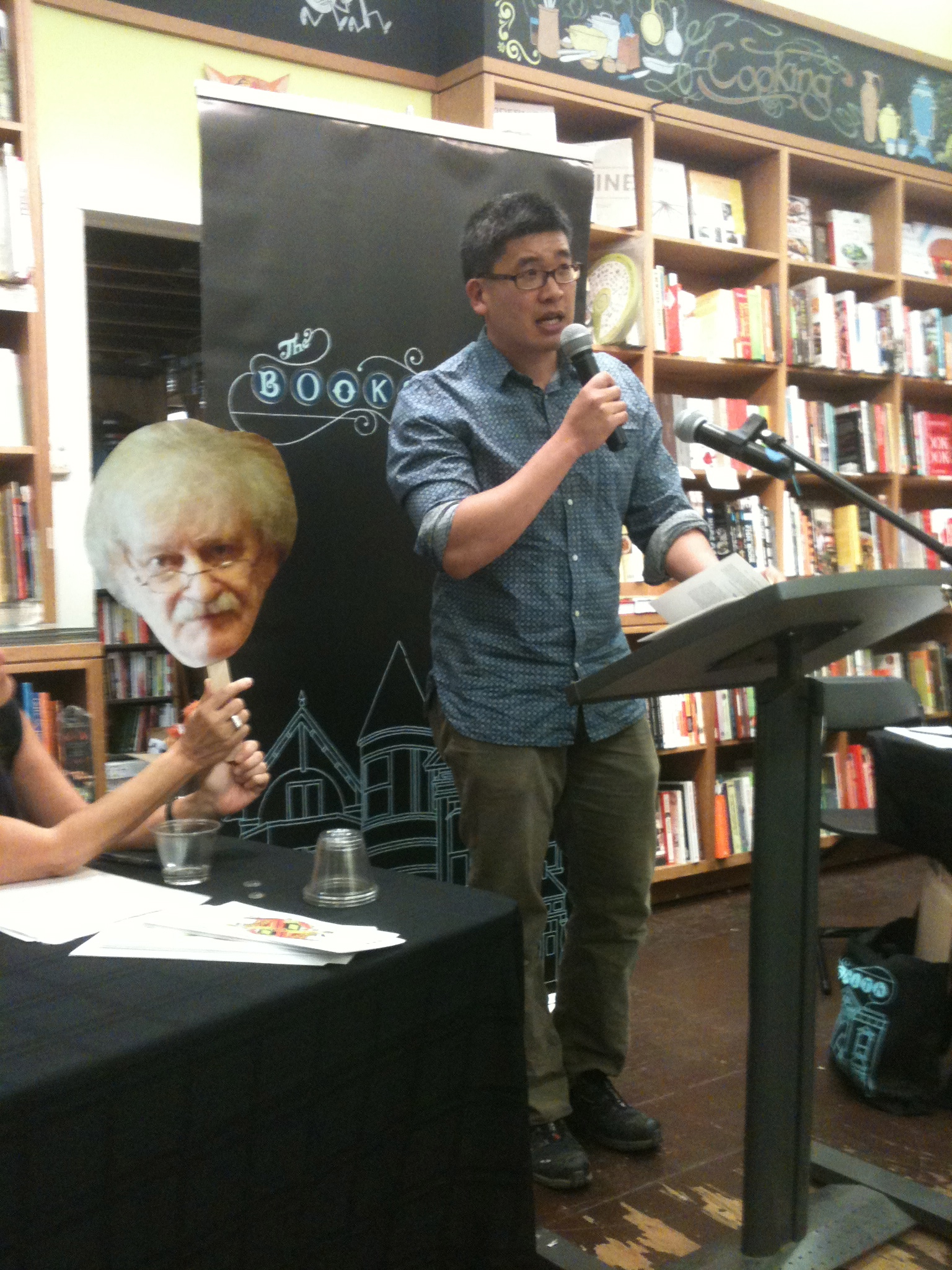
In late September, I read from Georges-Olivier Châteaureynaud’s story “An Occasional Icarus†at The Booksmith in San Francisco. It was part of a promo event for Kate Bernheimer’s recent retold myths anthology, xo Orpheus, and included Karen Tei Yamashita, Zachary Mason, and Anthony Marra. Evan Karp of Litseen covered the merry event, which included yours truly waving around a large head of his author. Here as some pics, courtesy screencaps from Evan’s video and my wife, Nicole M. Taylor.

I didn’t see anyone working harder than Evan that night. It was my first encounter with Litseen, and I was impressed. In the website’s own words, Litseen is
a resource for anyone interested in Bay Area literature. In addition to the daily calendar of events, which we update weekly using our Hub and daily as events come in, we go to events and film them and sometimes talk about them. We also give awayfree books in exchange for reviews and run a podcast, along with some other occasional features: Punk the Muse and Hello, Typewriter, for instance.

I’d like to take this chance to thank (extremely belatedly) Sofia Samatar for her shrewd and wonderful review, at Strange Horizons, of Châteaureynaud’s Small Beer collection A Life on Paper—a reminder of why we should read the author:
The weirdness is never left to stand on its own. The tale always takes one more step, yielding powerful imagery or psychological insight… The startling moments and unexpected turns packed into these extremely spare stories, many of which are less than five pages long, make for a reading experience that is disorienting in the most rewarding way, subtly creepy, and often breathtaking…
I’d argue that the significance of Châteaureynaud’s comment lies in the slippery nature of the territory he claims for himself…
[T]here’s no taint here of weirdness for its own sake, of the sterile pursuit of untried ways to put harpies and abominable snowmen together just to make something sort of shiny. Rather, there’s a sense of a long career (the stories in the collection were originally published between 1976 and 2005) during which a writer has been consistently unafraid to use anything, new or old, that would serve his purposes. The results are almost uncategorizable, providing both the pleasure of curling up with a ripping good yarn, and the haunting disequilibrium of the best slipstream…
In every story, wait for the jolt: the moment when the steamboat stops chugging lazily up the river, and takes to the air.
Now Out in Birkensnake: H.V. Chao’s “The Museum of the Future”
December 1st, 2013 § 0 comments § permalink
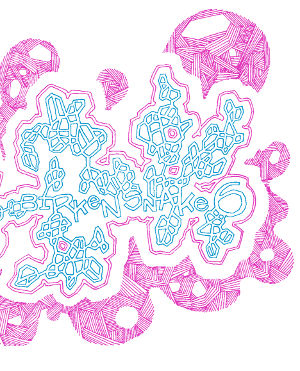
As alt-lit nerds may have heard, the ever-lovingly handcrafted Birkensnake produced 7 different versions of its 6th issue, each curated by a different editorial team. H.V. Chao’s “The Museum of the Future” appears in the version edited by Diana George and (the late) Hedy Zimra.
An excerpt:
We are delighted by the miscellany of moving walkways in the Hall of Transport: walkways encased in corridors of colored glass, walkways under sectioned canvas awnings, walkways rising at steep angles, walkways corkscrewing slowly floorward from great heights. Shadows dapple us, waft and ripple past, and for a moment we might be forgiven for believing ourselves on the ocean floor, so various are the airships that dally and meander overhead: the fanciful airphibians, the discopters, the gyroyachts, the flying wings. Busy ogling the countless conveyances, we realize only belatedly that although we have stopped in our tracks—are, in fact, standing stock still—we have not ceased to advance: beneath our feet, our own moving walkway bears us imperturbably along, at a stately pace suited to admiring the sights without letting our eyes linger on any single one. For there is a secret the museum’s curators know well: it is in glimpses, flashes, shards that the future lodges most deeply in the heart, pieces of a dream our memories return relentlessly to reassemble.
I Will Be Reading
November 30th, 2013 § 0 comments § permalink
this Saturday evening (tonight), November 30, at 6pm. The venue: the wonderful indie love-child of Tim Johnson and Caitlin Myers, Marfa Book Co.
You Can Hear Me
November 29th, 2013 § 0 comments § permalink
on Marfa Public Radio, KRTS 93.5fm, which will be airing an interview with me conducted by Rachel Monroe, today, Friday, at 10 am CST.
“It’s not working, let’s just drop it…â€
November 28th, 2013 § 0 comments § permalink

Available NOW: Jean Ferry’s The Conductor and Other Tales
November 27th, 2013 § 0 comments § permalink
From Wakefield Press, winner of a PEN/Heim Translation Fund Grant, the only book of prose fiction by ’Pataphysician, Surrealist, and fantasist Jean Ferry: The Conductor and Other Tales! First published to cult acclaim in 1950, in a print run of 100 copies, and since multiply revived by Gallimard (1953), Calmann-Lévy (1992), and Éditions Finitude (2011), this forgotten gem is finally in English for the first time, augmented by stories unearthed from the author’s papers. From this:
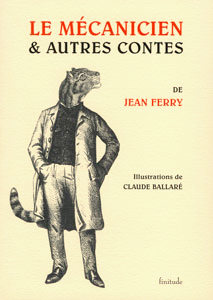
To this:
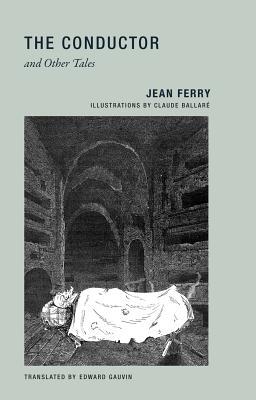
Available now from Amazon and other fine purveyors of the printed word.
No sooner have review copies been shipped out than reviews are already leaking in. Tosh Berman, famed Vian devotee and himself a fine connoisseur of things French—the publisher of TamTam Books and a buyer for LA’s indie favorite Book Soup—
“Now we can read this rarity and marvel to Ferry’s mix of humor and dread… having and reading this is actually a very important part of the puzzle. 20th Century French literature is a large spider with its webs going towards different directions and areas. Here is one map one should own and read.â€
Some stories from the collection are available online:
- “The Society Tiger” Weird Fiction Review
- “Bourgenew & Co.” Subtropics
- “The Garbagemen’s Strike” Anomalous
- “A Tear in His Eye” Anomalous
And others in print:
- “On the Frontiers of Plaster” The Coffin Factory #3
- “Letter to a Stranger” Birkensnake #6
Eugène Savitzkaya and Pierre Bettencourt in Anomalous
November 25th, 2013 § 0 comments § permalink
The 10th issue of Anomalous is out! Featuring my translations of Belgian poet and novelist Eugène Savitzkaya and French writer Pierre Bettencourt. The issue is available for reading and listening online or downloading, in its entirety, in pdf and mobi formats. My translations of short prose pieces by these authors include Savitzkaya’s “In the Rediscovered Book” and “In Memory of Tabacchino,” and Bettencourt’s “Taxidermy.”
Some excerpts:
“In the book rediscovered in the drawer of the Gordon press, in the white cellar of the house on the mountains in the land that knew so many plagues and disasters, you saw trucks rolling down a muddy road, their enormous wheels splattering cyclists, many cyclists, red, blue and green; you saw quite low over the woods the balloon in flames, and in a well-mown meadow, fallen oxen washed by rain; you saw, sitting on a stone shaped like an oval table, a young girl wearing a crown made from natural palm leaves soaked in varnish, plastic ivy leaves and pearl flowers, wearing a great black wool damask paletot, lined with gray squirrel glistening with dew, but browned in spots. No loupe was needed, all this was blindingly obvious.”
“Tabacchino was a child. Tabacchino was a dormouse. Tabacchino was a dog, a bird, a squirrel, an almond tree, a living being. Child, dog, dormouse, bird, squirrel, or almond tree, he breathed, drank water, had a clean smell, a unique charm, and grew old. He bore inside him sap that flowed groundward through openings planned and improvised. The wind would muss his hair, rumple him, refresh and sometimes torment him. The first Tabacchino to get the coup de grâce was the almond tree: drought, then woodcutters. They wept then, lovers of almonds, the child first among them. No one could put the tree back as it had been. The dormouse, terrified by an owl, succumbed to a heart attack, rotted, and was scattered to the winds. Not the slightest sign of that bird in the skies now. Seek the dog’s grave in vain. Then came the child’s turn: crushed, ground, and scattered.”
Born in 1955 to parents of Ukrainian descent, Belgian Eugène Savitzkaya has written more than forty books of fiction, poetry, plays, and essays. He received Prix triennal du roman for his 1994 novel Marin mon coeur. Rules of Solitude (Quale Press, 2004; trans. Gian Lombardo), a collection of prose poems, was his first book in English. His work is forthcoming in Unstuck.
“Dislocating the dummy’s limbs and knowing to fold oneself so as not to sit legs facing forward. No longer having to turn one’s head. Taking advantage of this at church and at the dinner table when a dish disagrees with you, or else during love, seated in the lap of the beloved, when the sight of genitals distresses you. Knees with a full range of swivel motion, rather than half-range.”
Writer, poet, and painter Pierre Bettencourt (1917—2006) was, despite coming from a prominent family, a retiring figure and lifelong outsider artist. He printed his first works on a family-owned press during the Nazi occupation, and later published Antonin Artaud, Francis Ponge, Henri Michaux, and Jean Dubuffet. A friend of Jean Paulhan, he was a frequent contributor to the Nouvelle revue française; Gallimard later put out a volume of his selected works. Ingeborg Kohn has translated a selection of his prose poems, Fables (2003), for the Tucson-based independent poetry publisher Chax Press. His work has appeared in The Collagist, and I have written on him at Weird Fiction Review.
Pierre Cendors in The Black Herald
November 24th, 2013 § 0 comments § permalink
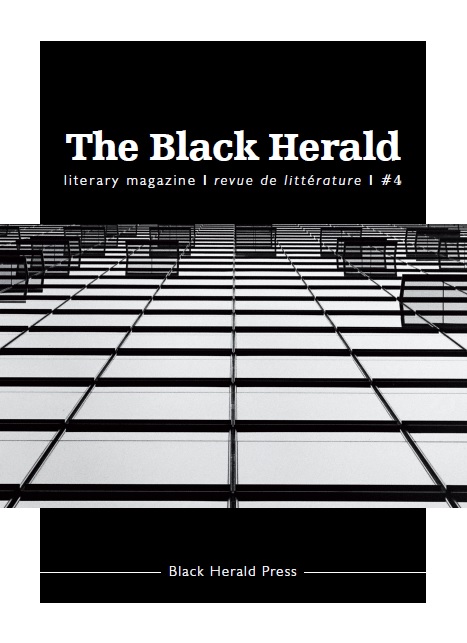
The latest issue of Paris-based literary revue The Black Herald, the innovative bilingual brainchild of Paul Stubbs and Blandine Longre, is now available for purchase in print and digital format. features my translation of a nonfiction piece by Pierre Cendors: “The Invisible Outside,†an excerpt from a book forthcoming from Éditions Isolato.
Here’s an excerpt:
Some places on earth overlap with the spirit’s untamed wilderness. Traveling to such places amounts to making a double voyage, a waking conversation between the senses and sense, ramble and ritual, geography and poetry. In this double movement, two aspects of the real, two faces of the same peak pierce the voyager’s consciousness, sometimes creating a calm and lucid kind of seeing, a trance state serene amidst the landscape’s unfurling.
Here in Hornstrandir, what is human comes after. After what? After what came before. Nature, the landscape of an isle that the elements shaped on a different scale, the timeless window it opens in our spirits—everything points to origins. That’s my starting point. The original fascinates me. I have contemplated it in Ireland, in Scotland, and in Greece… Now I contemplate it in Iceland.
Cendors, a French-Irish poet and novelist, was born in 1968, and has published more than eleven books, including the novels Adieu à ce qui vient (2011), Engeland (2010), and L’homme caché (2006) with Éditions Finitude, and Les fragments Solander with Editions La dernière goutte (2012).
The goal of editors Blandine Longre and Paul Stubbs is to publish original world writers, not necessarily linked in any way by “theme” or “style:
Writing that we deem can withstand the test of time and might resist popularization — the dangers of instant literature for instant consumption. Writing that seems capable of escaping the vacuum of the epoch. Where the rupture of alternative mindscapes and nationalities exists, so too will The Black Herald.
Issue #4 also contains work by Steve Ely, Paul B. Roth, Jean-Pierre Longre, Rosemary Lloyd, Boris Dralyuk, Georgina Tacou, John Lee, Cristián Vila Riquelme, Philippe Muller, Michael Lee Rattigan, Desmond Kon Zhicheng-Mingdé, Vasily Kamensky, David Shook, Oliver Goldsmith, Michel Gerbal, Gary J. Shipley, Anthony Seidman, Fernando Pessoa, Cécile Lombard, Anne-Sylvie Salzman, Heller Levinson, Jorge Ortega, and essays about Robert Walser, Arthur Rimbaud, Raymond Queneau, E.M. Cioran.